Blennies & Peatbogs
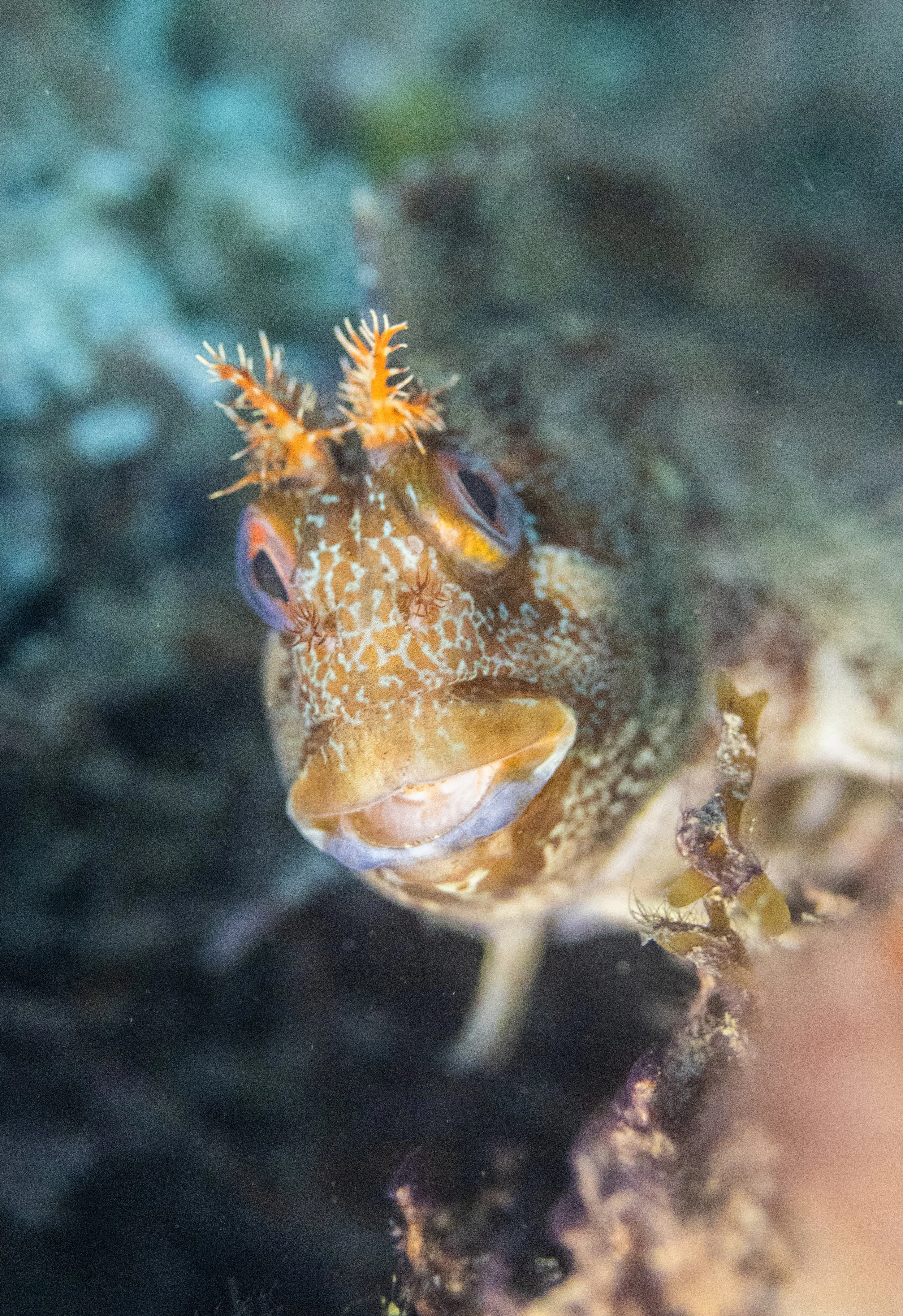
Tompot Blennie (Parablennius gattorugine) under Swanage Pier. Image © Christine Grosart.
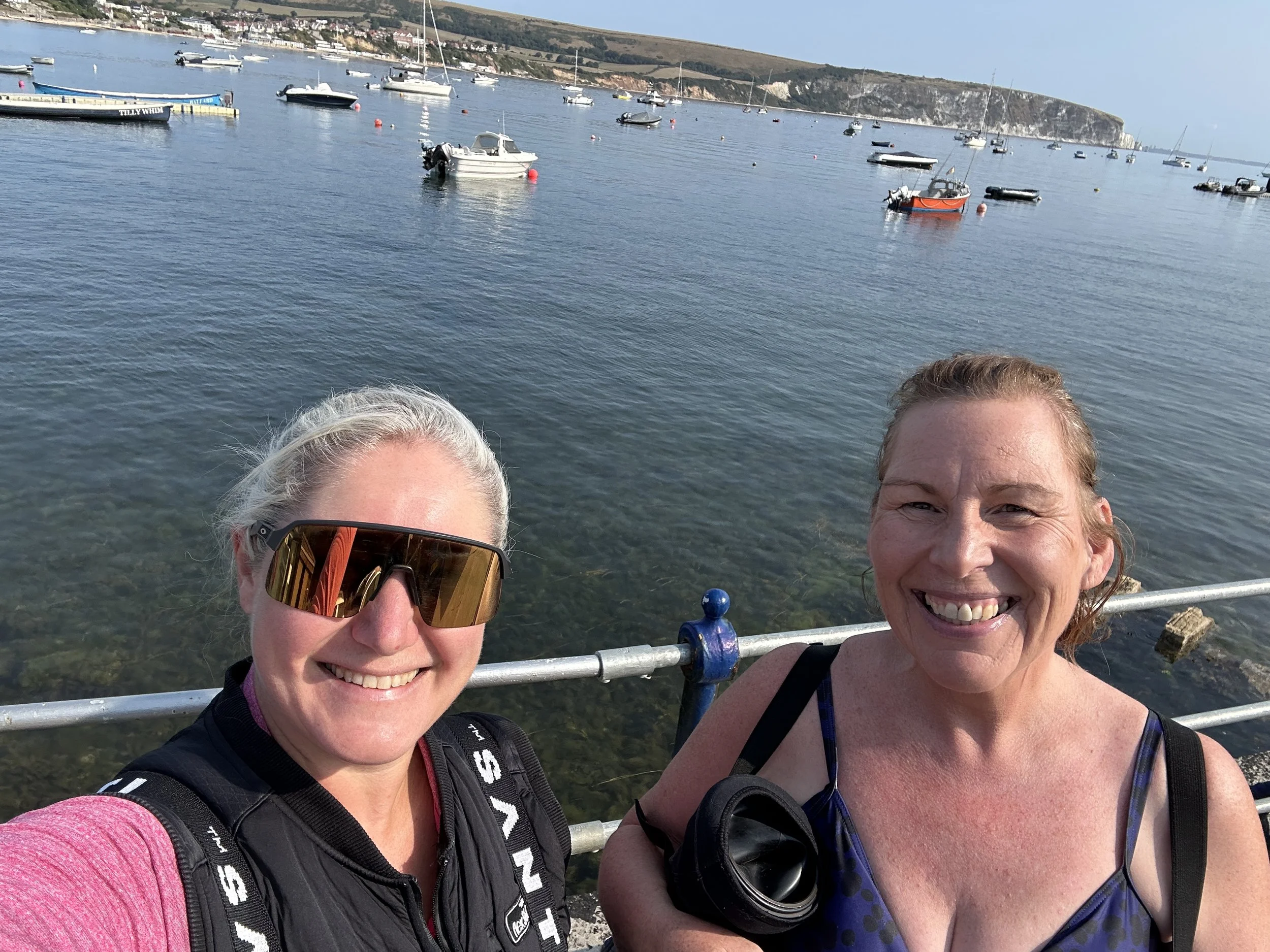
The gorgeous summer continued and it was time to catch up with one of my best diving buddies and friends, Kenni.
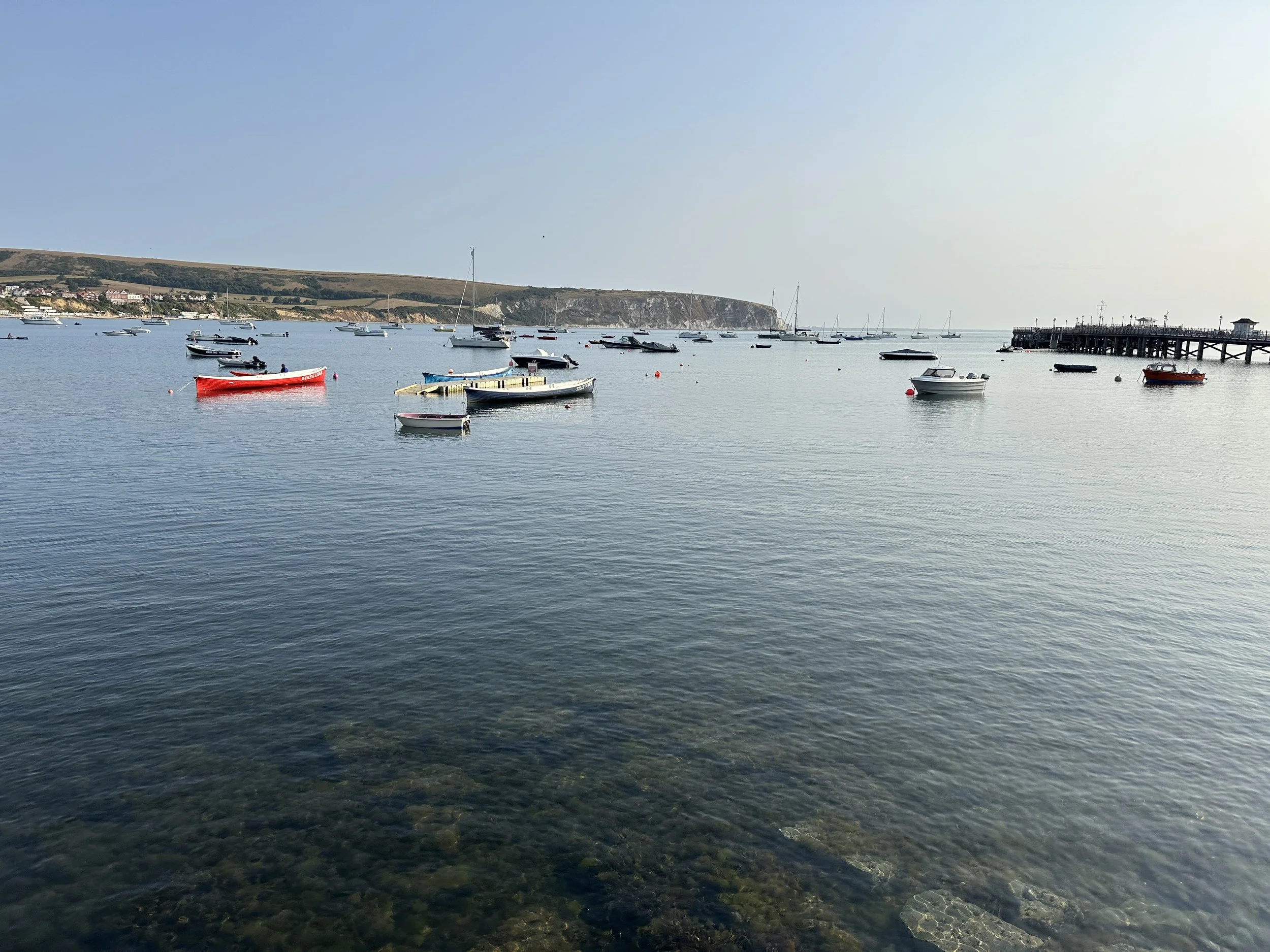
Swanage is one of our favourite diving spots and if I’m not mistaken, diving under the pier may well have been my first scuba dive in the sea.
I love going back there and these days take advantage of the easy logistics and shallow water to photograph the critters that inhabit the shelter of the pier.
I flooded my Ikelite underwater camera set up last year on Lundy, whilst making a stupid decision to change lenses at the last minute due to the boat changing the dive plan, and in my hurry, I didn’t put the lens port on properly.
Not only were the camera and expensive lens fried, but also the electronics inside the underwater housing. It was about £1500 of damage, the only saving grace being that I always opted for a relatively cheap camera, in case the worst should happen. I got a little money back from my travel insurance, but it barely covered a new lens.
Anyway, I bit the bullet and decided it was time for an upgrade. With the help of UK Ikelite dealer Nemo Photo and the guys there, I got a brand-new set up and decided to go for a mirrorless camera this time.
The Canon R100 is small, lightweight, again not too heartbreakingly expensive if I trashed it and would do the job for cave photography too. The ISO was by far superior to the 100D I had been using for years, and I finally accepted that my photography had outgrown the 100D.
Kenni and I swam out to the pier and started to get our eye in.
I’m not a fan of diving on a single tank but the pier barely reaches 8 metres in depth and with my dodgy shoulder, it seemed sensible to use a single. The only downside is you then need to lug a tonne of weight with a drysuit to actually sink!
I started to unravel my unwieldy strobes and focus light and focussed on a rock to get the settings right.
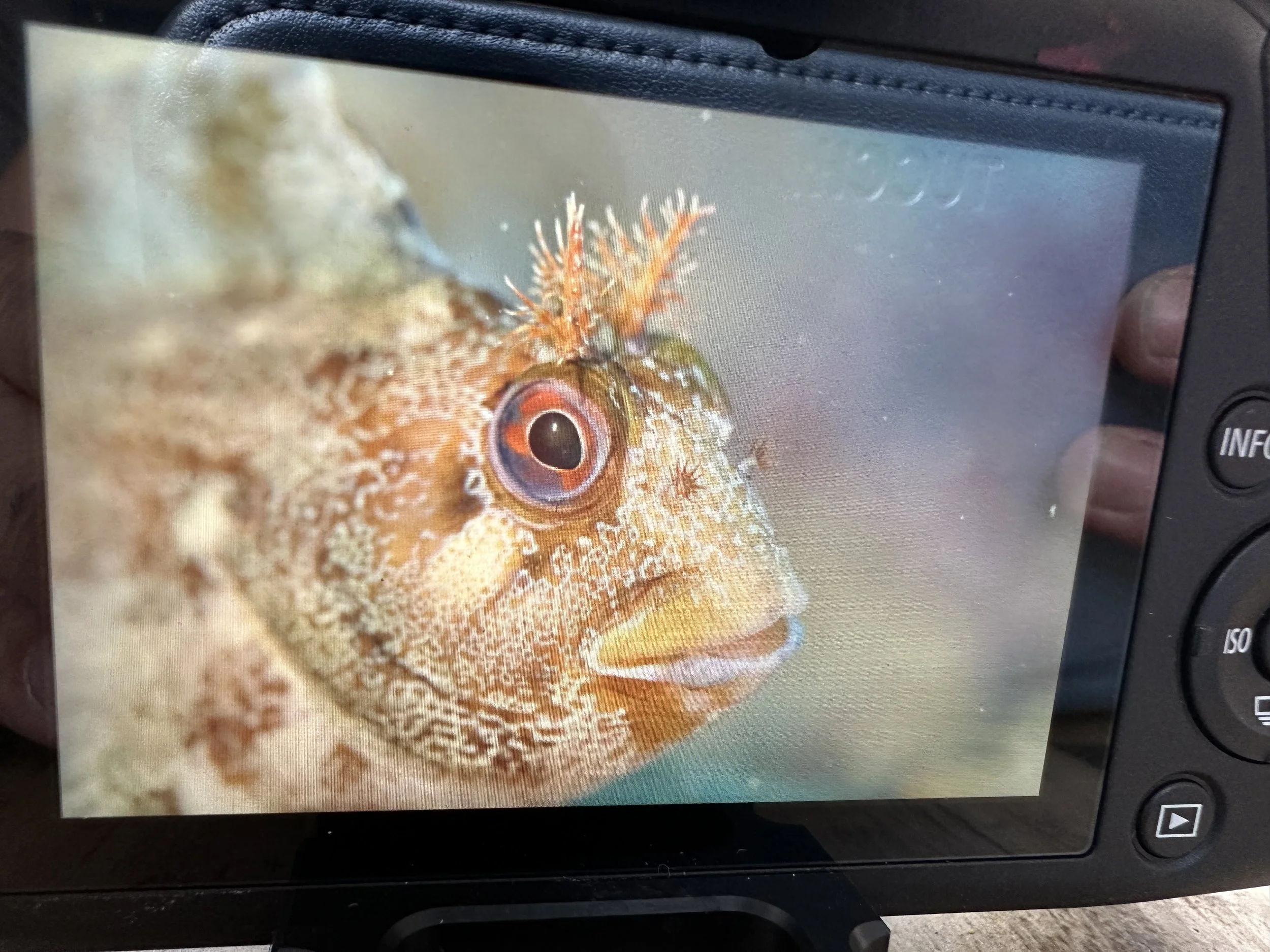
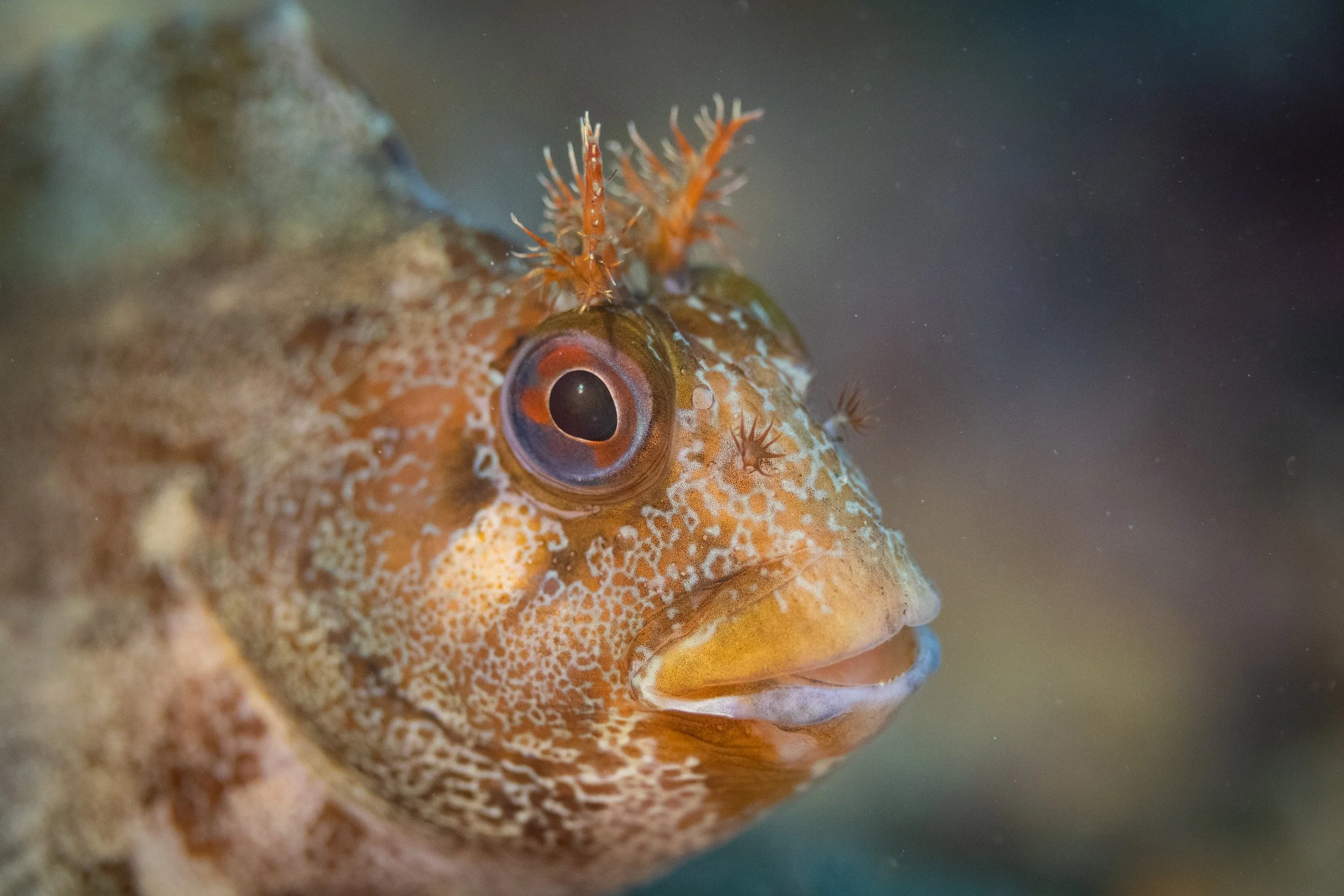
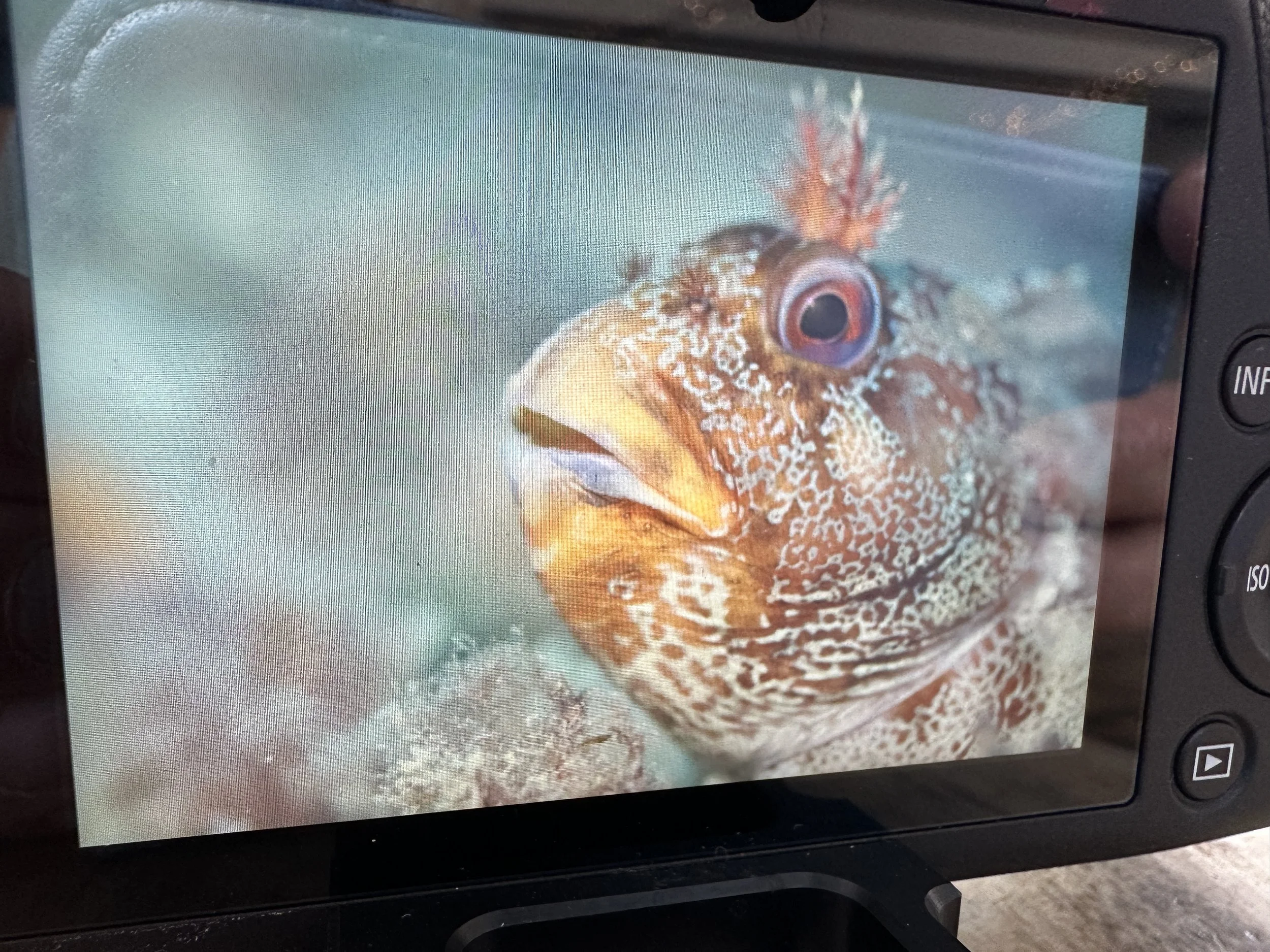
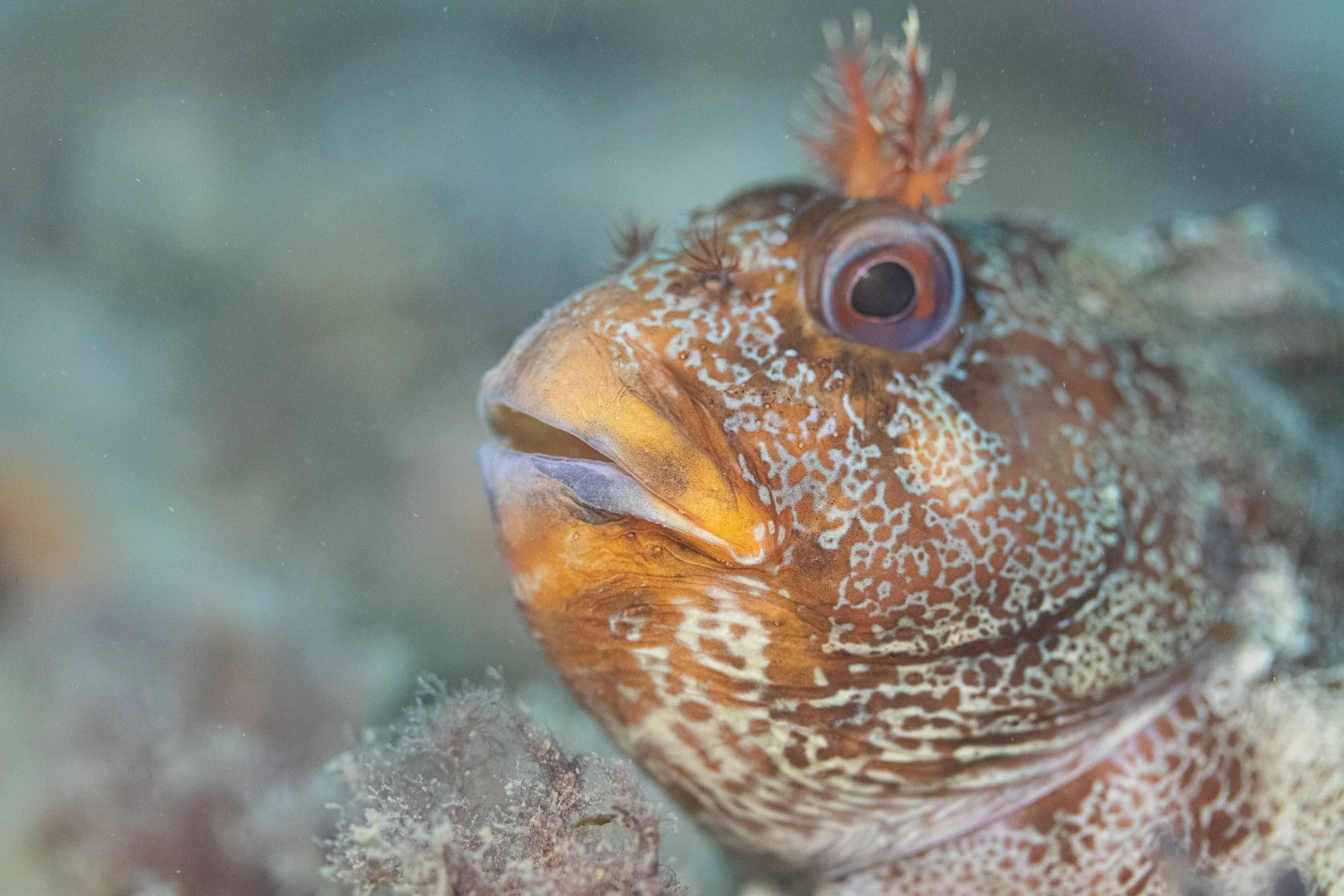
Tompot Blennie images straight from the camera and post (minor) edit. Images © Christine Grosart
It takes a while to get your eye in on macro dives. The best stuff typically comes at the end of the dive. Tompot Blennies are pretty much guaranteed under the pier, and most are quite obliging and will sit happily while you photograph them.
I’m a bit old fashioned and something of a purist when it comes to photography. If I need to make more than a few adjustments in Lightoom, then the image isn’t good enough - and I should go back and take it again. I guess that comes from starting with film and learning from some of the best, who fortuitously hang out in my caving circles.
If an image is improved almost beyond recognition then in my view it becomes photo art and simply the ability of the photographer to use a computer package, rather than take a good photo.
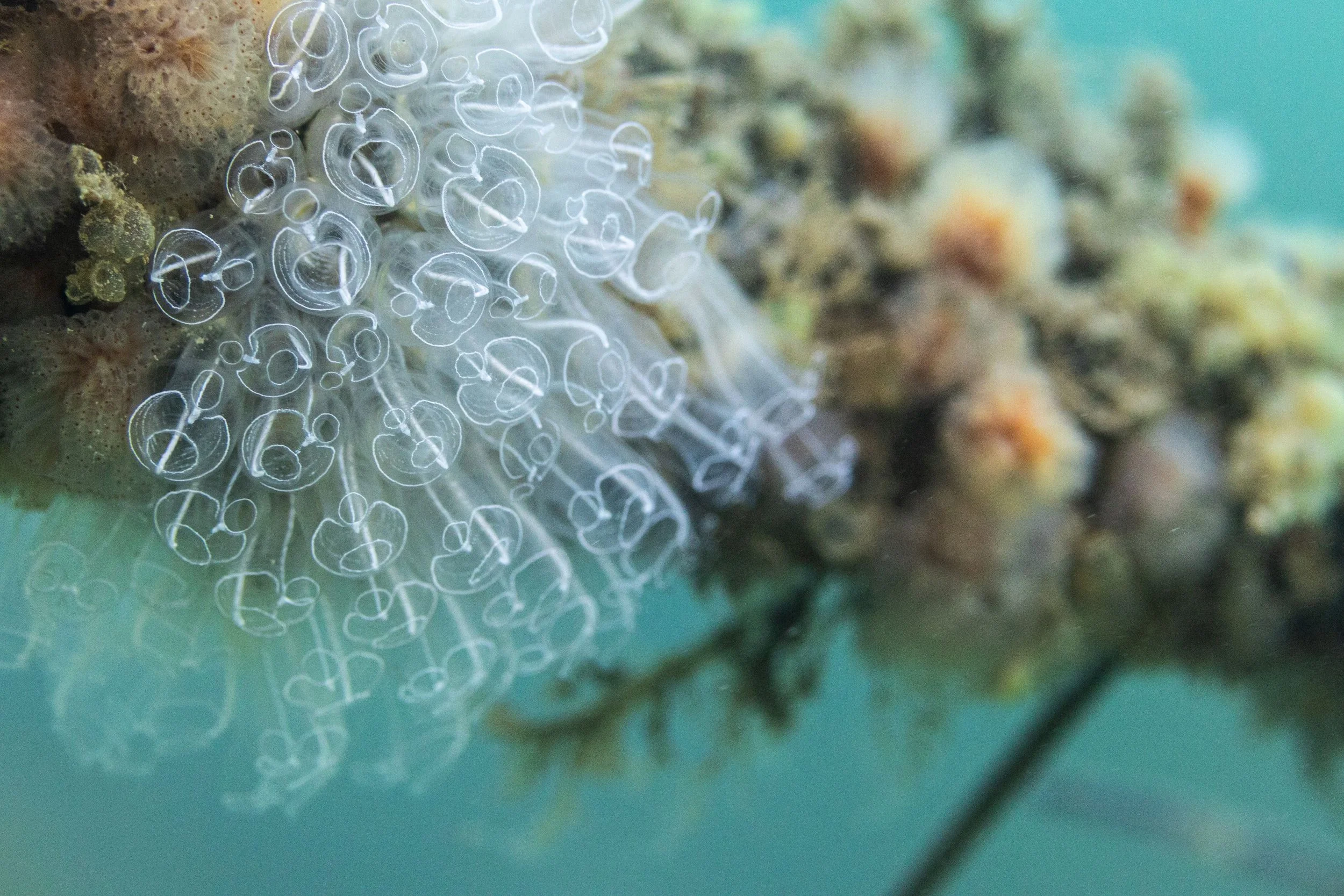
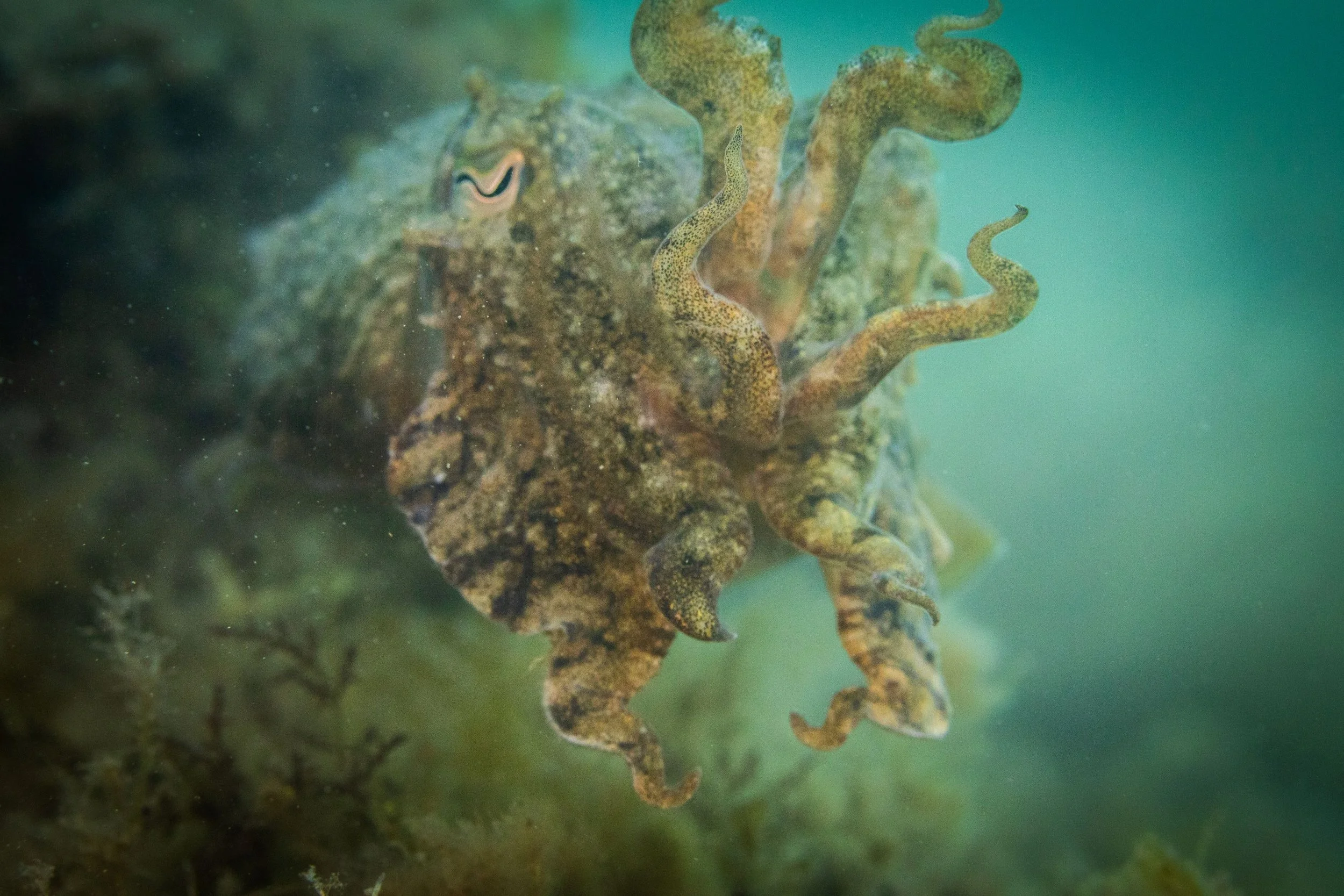
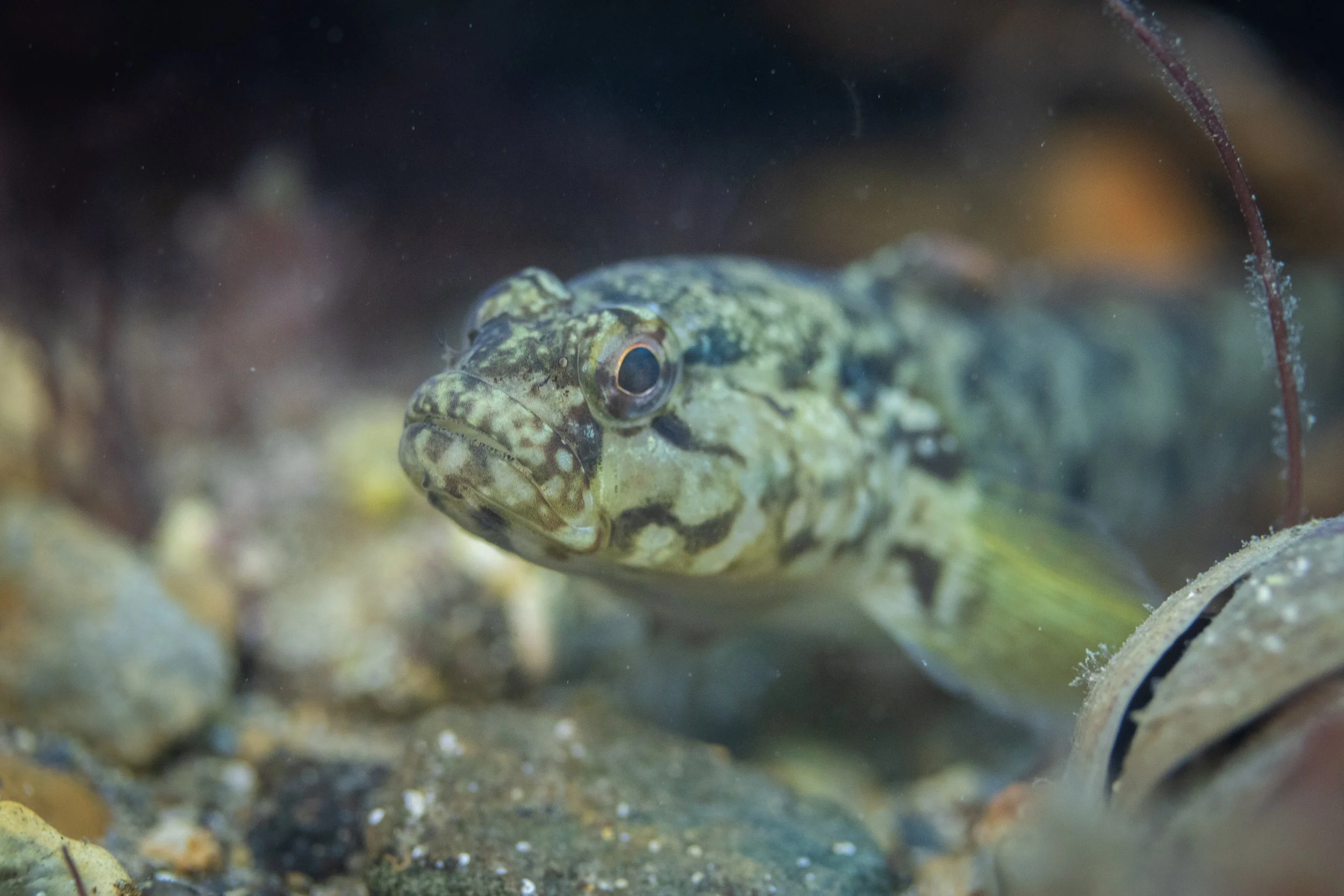
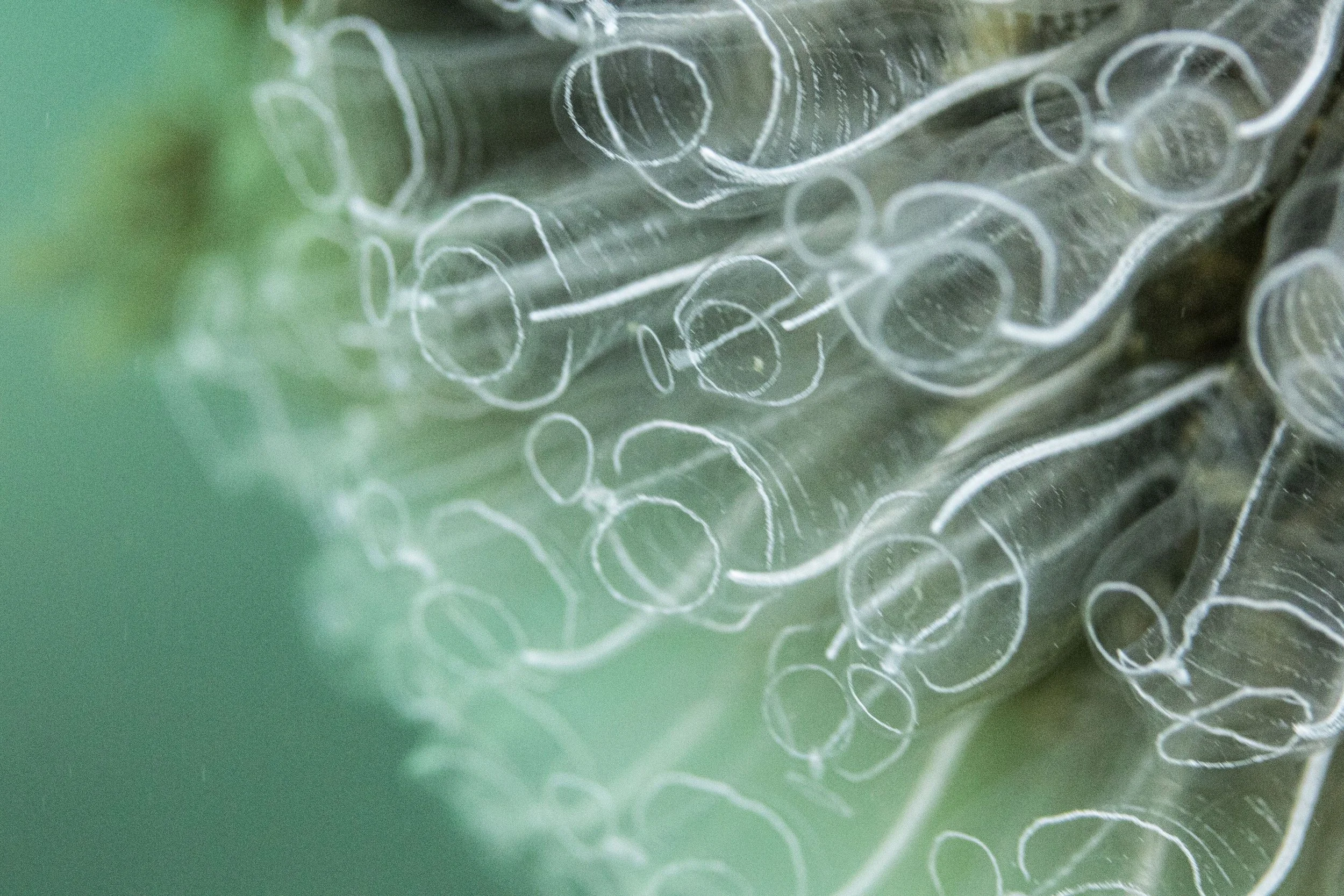
Lightbulb Sea Squirts (Clavelina lepadiformis), Cuttlefish (Sepia officinalis) and Common Goby (Pomatoschistus microps) - I think…. Images © Christine Grosart
The trick is to get lower, get closer, get lower again and closer again, whilst all the time watching the animal’s behaviour. Most Tompots will let you get very close as they fancy themselves in the lens port. But one step too far and they are gone. Having good buoyancy and the ability to manoeuvre yourself backwards and sideways without using your hands is a must – you need your hands to hold the camera steady and operate the controls.
Photographers make the worst dive buddies. We pay no attention to our buddies (much) and don’t move much. Once we have found a subject we’ll easily stay there for half an hour in the same spot trying to get the perfect shot.
The Seasearch observer course taught me to slow right down on my dives and how to really see, not just look. It taught me patience and now, even in 1 metre of mucky visibility, I still get something out of a dive, whereas many years ago I would have been bored stiff.
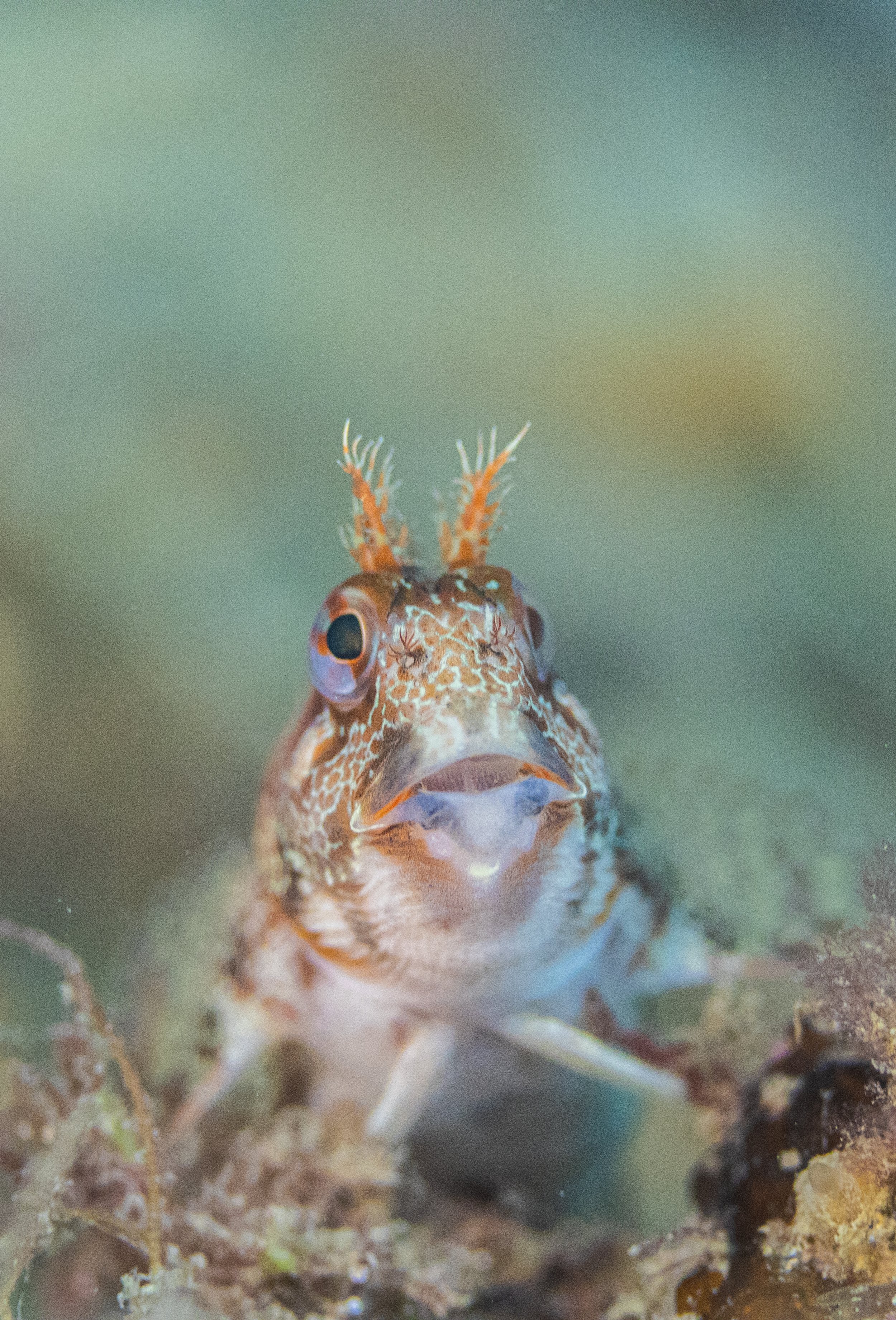
Tompot Blennie (Parablennius gattorugine) under Swanage Pier. Image © Christine Grosart.
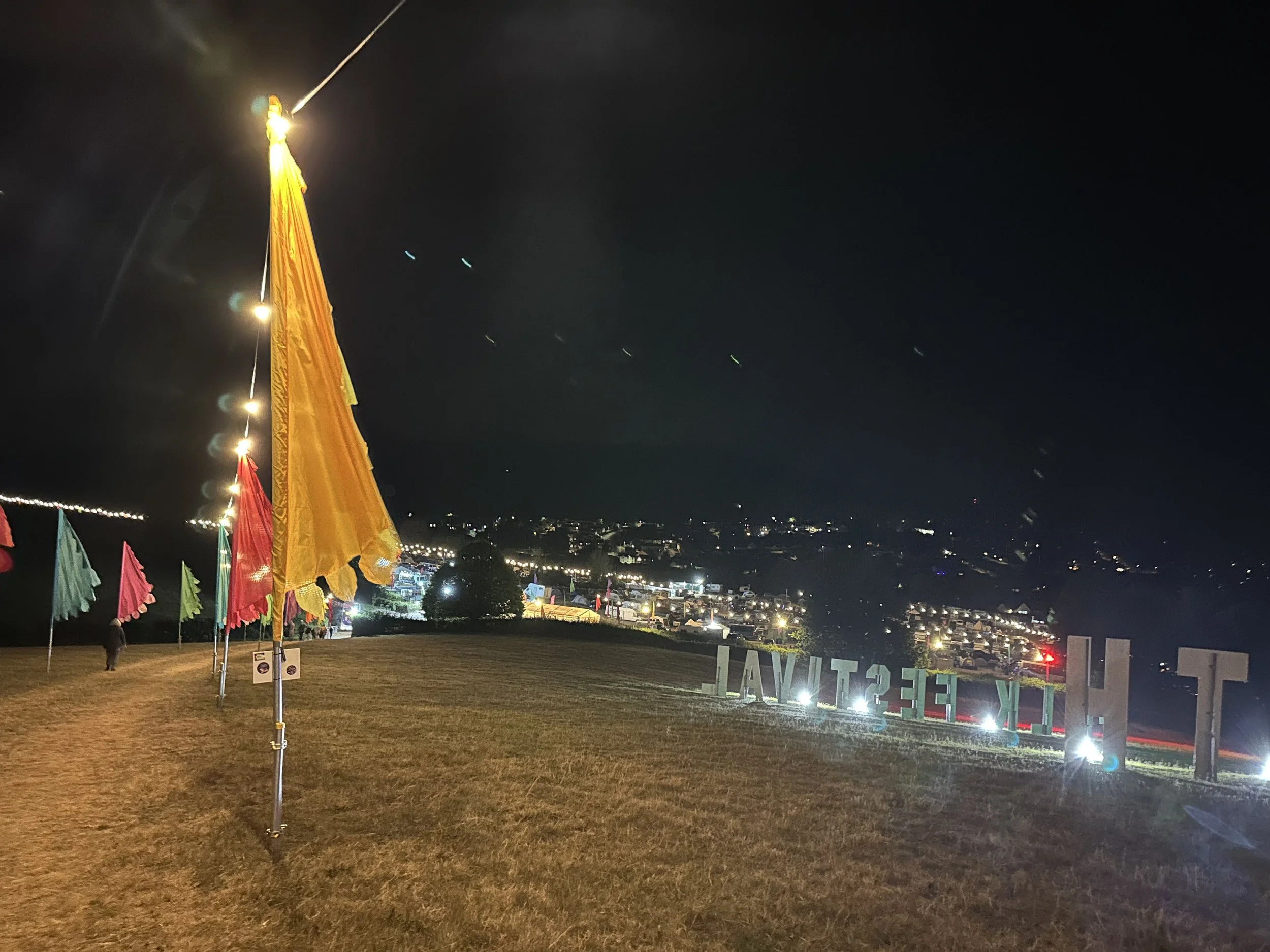
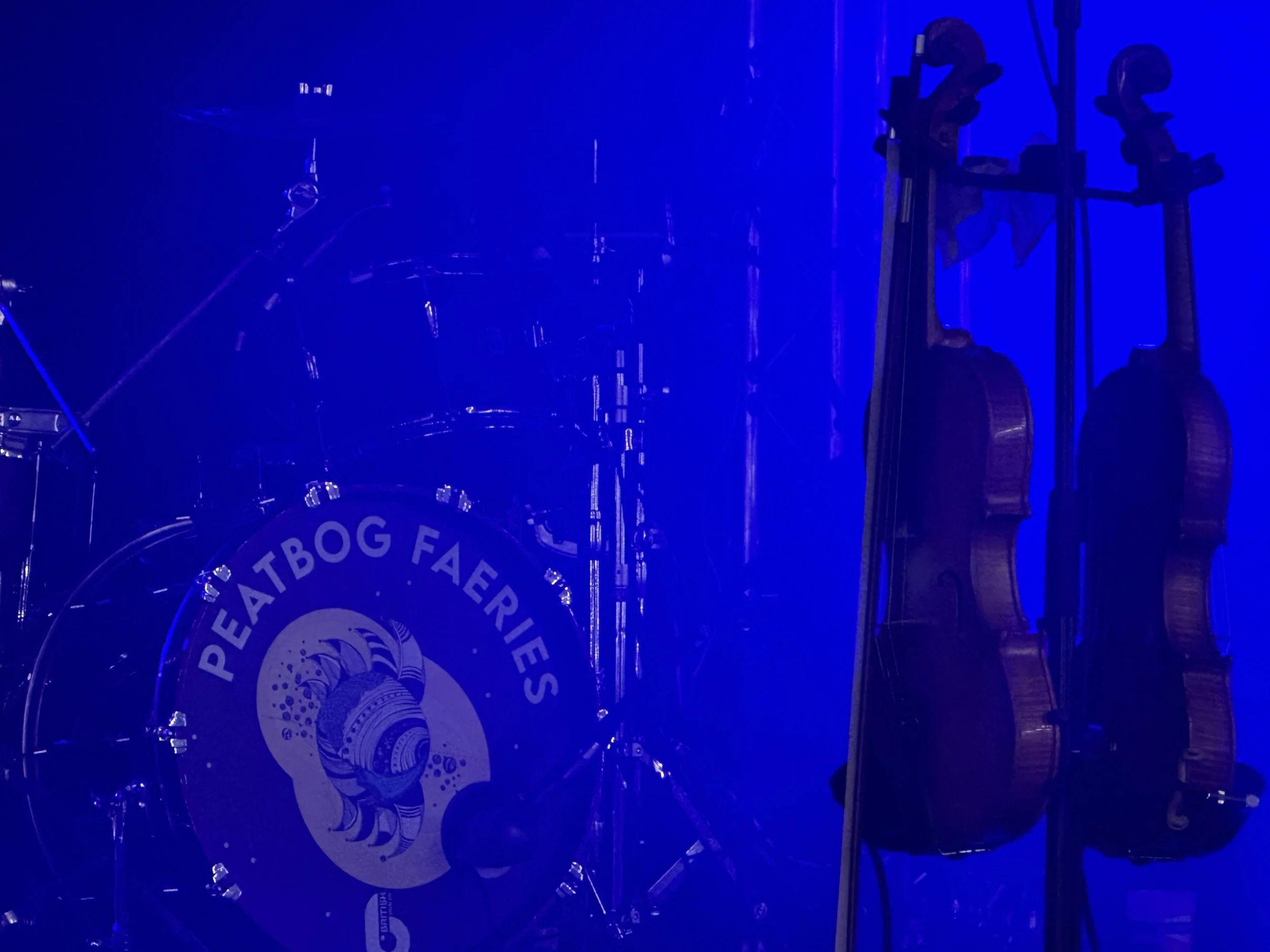
After 3 hours underwater, it was time to have a quick shower (or not as the pier shower was once again out of order) and head down to Sidmouth to go and see one of my favourite bands, the Peatbog Faeries. Hailing from the Isle of Skye, this band are fantastic live, and they rounded off a perfect day.