
Conger Conger
I've been trying to get to grips with some scientific names for various marine critters. They tend to be formed from genus, species and sometimes order and class.
The easiest one to remember is 'Conger Conger'. Not very imaginative and I guess, in a class of it's own.
This one in Lyme Regis, Dorset was in a cage of it's own.

It had got itself trapped in a large, lost fishing pot, doubtless looking for an easy meal. A spider crab cowered nervously in the corner and the eel was stuck fast through the netting, unable to go forward or back with no chance of escape.
The charity Ghost Fishing UK had been tipped off about two lost pots which had got their lines tangled up in an old diving shot line and subsequently snapped off, abandoning them on the seabed.
Now, both the shot line and the lost pots were threatening unwitting wildlife.
As part of a 5-day marathon effort by the charity and its volunteers, not aided by Covid-19 restrictions and ever changing legislation, a team of 6 divers set out from Lyme Regis to dive the Heroine. Consisting mainly of brick cargo and conger eels, this fairly flat wreck had snagged both a shot line and string of pots, the latter laying hopelessly on the seabed just next to the wreck.

I was on the camera again, using my new Canon 100D and Ikelite housing set up, with Ikelite strobes and snapped some shots of Andy Rath collecting up the old shot rope, made mostly from polyprop. Floating neutrally buoyant, it was a very real hazard for divers, cetaceans and boat propellers alike.
Once removed, the pots eluded us until the other team jumped in to join us. It wasn’t long before we found a large, lost cage just off the wreck and stuck fast, a resident conger eel.
The pots had been there an estimated week or so. The conger wasn’t in bad condition and his cellmate, a nervous spider crab, cowered in the corner, trying hard not to be his next lunch.
I got in close and set about the camera.
Scuba divers are the eyes of the ocean and without underwater images and video, the public remains completely unaware of what is going on beneath the waves. How can anyone care about something they cannot even see or simply just don’t know about?
Satisfied with my images, Fred gave me an OK question signal to which I replied ‘OK’ I was done.
I did not expect what happened next, as Fred immediately opened the lid of the cage!

I screamed through my regulator, climbed over Andy leaving him confused and dishevelled and hid well out of the way, expecting the conger to sense freedom and set about immediately biting me.
Of course, nothing of the sort happened. Fred spent the next 5 minutes trying everything he could to get the conger out of the cage.
He tipped it on its side, shook it about, cut away some of the net which the conger was ensnared in and even tried to remove it by its tail. He wouldn’t budge.
Eventually, after more persuasion the conger slipped slowly and unceremoniously out of the cage and swam nonchalantly off along the sand to head back to his lair in the piles of bricks.
The grateful spider crab also made a break for it at a significantly quicker pace and the team set about raising the pots to the surface.
The pots were returned to their owners in an attempt to work up relationships with the local fishing community. Without their trust, we will not be able to get information where fishing gear has been lost and won’t stand a hope of recovering it before it does untold, wasteful damage.


A Grotty Sergent
Rich wanted a day off. So I took him caving!

Grotte du Sergeant. Image: Christine Grosart
Somehow over the last decade I have managed to avoid this very pleasant little cave. I must have misread the instructions because 300m walking later we had not found a 'large porch' - or anything resembling a cave.
This is not unusual. I have been up many garden paths, gum trees and on several spectacular wild goose chases in this region. It is hot, scrubby bush bashing and the best you can hope for is some sort of cairn, bit of paint (which could mean anything really - like, a really long GR route.....) or a couple of contradictory arrows painted on trees.
There was some pleasant scrambling on grippy limestone river bed with dried up plunge pools and lots of lizards, before we finally got to a 'combe' where we couldn't go any further - the cave had to be here.
It was - a vertical but not difficult scramble up the cliff face!
Once in the cool entrance, we wandered off down pretty but not spectacular dry fossil cave with a sandy floor. It probably does resurge in exceptional weather, but it hadn't in a very long time.
I took the opportunity to take some photos with my new camera and see how I got on. I'm reasonably happy with them, especially given there were only two of us.
I get the feeling this is the Herault's version of 'Goatchurch' - but much nicer and would be a good starter cave for any led groups I bring here in the future. It has nice little climbs, abseils to protect the vertical bits and pretties. Plus a great view from the entrance.
Well worth the afternoon out.


To be a Fellow
"Dear Miss Grosart,
I am writing to confirm your successful application for Fellowship of the Royal Geographical Society (with IBG)."
Well.
That's not something I ever expected!

Someone at work asked me why I explored caves. What did I get out of it?
They didn't see the attraction.
There's no money in it. In fact, it drains your own personal finances. No prestige.
No job prospects. No gold medal. Rarely any recognition other than the occasional nod of approval from your mates in the pub that night.
You get to call a piece of this planet your own for an unknown period of time - until that is, another human goes there after you. Until then, it's yours.
But honestly? Nobody really cares.
The Royal Geographical Society (RGS) is the United Kingdom's learned society and professional body for geography, founded in 1830 for the advancement of geographical sciences.
Today, it is the leading centre for geographers and geographical learning.
The Society has over 16,500 members, with its work reaching the public through publications, research groups and lectures.
Through my work with Ghost Fishing UK, I had come to the attention of Paul Rose, the popular explorer, former vice president of the RGS and tv presenter.
My CV, which was rather rather unsung, showed many years of cave diving exploration in France and Croatia.

Chris preparing to push the sump at the end of the Garrel
I was mapping new, uncharted territory in stunning underwater caves across Europe but very few people knew of it and even less cared.
One of my favourite pastimes is making films about exploration. I want to share our discoveries and show the diving world what goes into virgin exploration, going literally where no other human has ever been.
I never take myself too seriously though - it is meant to be fun after all! There is usually a healthy selection of outtakes to bring me back down to earth.
It meant the world to me and that's why I do it.
The primary reason for Paul's interest was the charity Ghost Fishing UK which was ground breaking, with the largest single collective of divers in the world, the first training course in the recovery of ghost gear and a powerful database of locations, types and impact of ghost gear in British waters.
Run entirely by volunteers, it had changed the lives of over 70 divers and was starting to make a real impact on the perceptions of the marine environment and the damage ghost gear can do, to not only the diving world but the general public.

A long standing, massive issue that was largely taboo and very much hushed up and overlooked, was now being exposed.
An estimated 640,000 tonnes of fishing gear is lost into our oceans on a global scale each year. Whilst great strides and efforts had been made to manage fish stocks and sustainability, huge fuss being made about super trawlers and fighting over fishing grounds...the fact that every commercial fishing vessel has at some point lost or abandoned fishing gear to the ocean to continue ghost fishing, had not even been considered.
My role in the charity covers lots of areas. I set out as a trustee and secretary, while my underwater role tends to always be videography and photography. An image speaks a thousand words, especially to the non diving public, so this is an area I am quite devoted to. I also make films, short AVs and documentaries about Ghost Fishing. I do all the press releases and connect with the fishing communities and make hard won friends and connections who are nervous of our intentions. I call myself the charity ‘dogsbody’.

Ghost Fishing diver. Image: Christine Grosart
I've taught myself all about sound recording, underwater videography, lighting and getting the most out of Adobe Premiere Pro.
I hate not being able to do something - if I can't do it, I have to go and learn how!
It took months and months of work to build, write and test the Ghost Fishing UK training course.
Run over 3 days it is designed to turn carefully selected divers into Ghost Fishing divers, who can work safely as a tight team, in close proximity to ghost nets.
It is immensely satisfying work but very, very time consuming and I admit to struggling to combine both cave exploration with running a charity full time and holding down a high profile job for a significant company offshore.
But hey, you're only on this planet once, I believe, so it is my mission to make the most of it and record as much as I can for posterity, inspiration and creating fond memories to look back on.

Lockdown Litter - Time to take a stand?
"Do you think that's cider?"
I asked my next door neighbour, Redd, as we poked through the brambles on the side of the road with our litter pickers.

It was a cold, slightly windy and very dull grey day. We were in the middle of the longest lock down ever and so utterly bored and fed up that we decided to start cycling.
It was during our tentative, lung bursting wobbles around the village that we were both noticing horrendous amounts of litter.
“Mate…that’s not cider….”
I did wonder. I mean, why would you drink some of it and then put the lid back on the 1 litre plastic bottle, then chuck it in the hedge?
How naïve. I’m a Paramedic as well, so the smell as I emptied it should have been a clue.
Just gross.
Turns out, the lorry drivers that have been visiting the village industrial estate have been parking up for the night or for a few hours to take their rest periods - and without toilet facilities, have been peeing in bottles and chucking them into our hedgerows.
Single use face masks. The latest scourge. Once in our drains, they are in our waterways and cause blockages - the least of our concerns.

A new blight was also noticeable, mostly within a short range of our village ‘hub’ the Co-Op convenience store. This seemed to be the final resting place for 15 of the 31 single use face masks we found.
According to the Marine Conservation Society’s Great British Beach Clean 2020 results, Personal protective Equipment (PPE) was significantly increased.
Face masks and gloves were found on almost 30% of beaches during the clean-up. The Source to Sea Litter Quest data showed that more than two thirds (69%) of litter picks finding PPE items such as masks and gloves.

Further down the road, drinks bottles, food containers, takeaway cartons and even full bags of litter thrown from car windows increased in quantity and density.
In one gateway, a pile of plastics had accumulated at the pinch point of a stream, right next to a field where cows were grazing. In another, piles of empty Carling cans densely filled one hedgerow. Someone had clearly had a fun drinking session here, but not only did they forget to take their cans away - they also left the 4-pack plastic yokes behind. Three of them.


Uncut, these can cause horrific injuries to wildlife.
Some companies are now making these yokes not only degradable but edible! Carling claim to have got rid of the plastic yokes but a quick visit to the village Co-Op showed a very different story. There was the puppy - and the poo.
Talking of poo….Redd is a dog owner and is incensed by other dog owners who leave their dog turds lying around on pavements and other people’s driveways. It isn’t surprising either, as the village has several escapees who wander the village by themselves. Presumably the owners neither know nor care.

We recovered over 750 items of litter in just under 4 hours.
Some hero.......Argos - what are you thinking?


At the beginning of February, I embarked on a National Geographic educator course called ‘Collecting Data to Explore Plastic Pollution in Our Communities’. It ties in quite nicely with the data collection work I am doing for the charity I run called Ghost Fishing UK.
Through this course I’ve learned how to create some very powerful and visual results. We did another one in the village on 14th February, just 20 minutes as per the Nat Geo course task.


In just 20 minutes we collected 116 pieces of litter!
If you are interested in doing litter picks, whether in the area you live your favourite beauty spot or on the beach, here are some handy tips to get you started.
Protect Yourself - Use PPE.
Make sure you use gloves and get yourself a litter picker. I definitely recommend a bag hoop to keep your bag open, especially on a windy day.
Get written consent from anyone you take a photo of (you don’t legally need it, but you may with children if you plan on publishing) and complete an easy risk assessment form (Example risk assessment form).
Wear high vizibility jackets, wrap up warm and make sure your phone is full charged.
Data Collection
There are several data collection tools out there - I would argue far too many, as this means all the data is collected differently by different people and there is no standardisation and no central database.
So, it is up to you where you hang your flag and what you use.
Here are some suggestions:
Marine Debris Tracker app
Set up a free account and you can download the data from the CSV file on their website.
This can be imported into Google Earth (instructions below).
Simply choose the list (begin with NOAA if you are new to it, but the Nat Geo list is very comprehensive) and tap on the item of litter each time you bag it. The app follows your route and will drop a pin on a map each time you log a piece of litter.
This is a very powerful tool for collecting geospacial data and provides evidence of litter ‘hotspots’.
To get the map, screen grab the plotted map BEFORE you submit your data
or you won’t be able to get it back!
The app generates some cool graphics which can be screen grabbed from the website.
To make a cool Google Earth KML file, follow these instructions:
1. Go to the Marine Debris Tracker website and download the CSV for your litter pick.
2. Open Google Earth on your computer
3. On your computer, open Google Earth Pro.
4. Click File > Import.
5. Browse to the location of the CSV file and open it.
6. In the box that appears, next to Field Type, choose Delimited.
7. Next to Delimited, choose Comma.
8. Use the preview pane to ensure your data has imported correctly and click Next.
9. Next to "This dataset does not contain latitude/longitude information," leave the box unchecked.
10. Select the fields in your spreadsheet that contain the latitude and longitude data and click Next.
11. Click Finish. Google Earth begins geocoding your data.
12. To use a style template, click Yes.
13. Click OK.
14. Create a new style template, or use a previously generated template.
You should now have all the items you collected, following the path you took. You can also draw a route and measure it using the rule tool in Google Earth, as I have done with the red line here.

Another very cool feature is that you can add images to the litter points to show photos of what was found, where and when.
You can also share your KML file so others can look at your Google Earth litter pick route and see what you found and where.
Village Litter Pick KML 14022021.kmz
Download KMZ • 20.39MB
If you prefer good old paper and pen, then the Marine Conservation Society survey sheet is more than adequate and works fine for inland litter picks as well as beach cleans.

When completed, fill out a summary sheet. Don’t submit it to MCS though unless it was actually done on a beach.
You can track your route and progress using an exercise app such as Strava.
Keep Scotland Beautiful also has a handy survey form. I could not find one for England so please let me know if you come across one.
At the end, I produce a summary sheet along with images as an ‘evidence pack’ and send it to whoever I think will listen. Parish Council, District Council, local papers, local social media - anywhere you think will make people wake up and listen.
Why not let us know how you get on. Have you done a beach clean or litter pick recently? How did it go and what did you find? Where did you send the results?
We would love to hear from you!
Our Village litter pick gallery. A huge thank you to Redd Moon for her company, enthusiasm and bravery in these litter picks!


Going Bubbleless
Learning to cave is the beginning of a whole new adventure.
Where else can you take up a hobby which can lead to exploring parts of this planet where literally, nobody else has ever been? All the mountains have been mapped and most of the ocean floor has been documented.
But nobody knows what lies inside the Earth until somebody goes there.
Many cavers spend their spare time ‘digging’ to remove obstructions in caves such as sand or boulders to open up new cave passages, or even dig open new ones from the surface. I’m far too impatient for that! In order to discover places no human has ever been, I took up cave diving in 2004 and never looked back.
I had mostly used conventional SCUBA equipment, reconfigured for appropriate use in caves.
Following my 2017 exploration in a cave called Izvor Licanke in Croatia, the logistics of using this equipment became a limitation. The cave was deep and we only had enough gas and bottles for one dive on the expedition.

Chris learns her closed circuit rebreather in Egypt
So, I bought a machine called a Closed Circuit Rebreather. It meant learning to dive in a slightly different way and I figured the best way to learn was to get lots of time in the water.
My partner Richard and I headed out to Egypt last summer to take a little break and spend hours getting used to my new equipment. Hopefully, this new rebreather will open up many doors and allow me to explore Licanke even further to discover yet more places unknown to humans.

Image of a clown fish: Christine Grosart, 2017

Winner Winner Chicken Dinner!
Well…that’s what we used to say way back when I worked in horse racing!
But this time, I’m super happy that my image of a diver cutting away a Ghost net in Scapa Flow won an award.

Diver in Scapa Flow. Image: Christine Grosart
I headed down to Brixham with Paul Duckworth to promote Ghost Fishing UK and run a stand at the Brixham Marine Conservation day. We met some great people and I gave a talk on the project which went down really well. I was over the moon that my image of Colin Stratton and the Ghost net won the Underwater Conservation Photograph contest.
I came away with a Manfrotto camera bag and no less than four DSLR photography books.


Autumn Atlantis
Autumn saw my final trip of 2019 on the Atlantis. The divers were working a little shallower and I had a reasonably quiet trip. We were treated to some stunning sunsets and the views from my cabin were pretty cool too.

View from my cabin in the south north sea.
I was very happy to be invited to talk at the Birmingham dive show yet again. I'm lucky to have such a wide range of topics to talk on.
Last year I talked about my cave diving exploration project but this year I was able to talk on Ghost Fishing.
This was doubly exciting as Ghost Fishing UK had a stand at the dive show for the first time and it was definitely the best thing we had ever done in terms of outreach.
We raised a huge amount of cash for the charity and all the volunteers on the stand, working for free all weekend, were flat out from the second the doors opened.
My talks on the Diver stage were packed, especially Sunday which was several layers deep in standing room only.
There is clearly an appetite for divers to help the aquatic environment and we are very happy to provide them with a pathway to making a real difference.

Boka Atlantis. Image: Christine Grosart

Perdreau set-up day
I decided that embarking on Garrel today would be a silly move. Still with remains of a chest infection, the caving trip, though moderate, is quite long and I am still quite weak, so we decided that the Perdreau-Fourmi was a more pleasant option.
True to form, Jean Tarrit rallied a few friends from his club and they arrived to help us carry our gear in two journeys up the riverbed.
I headed through the entrance squeeze and into the cave to start rigging the 45 degree slope and 15m pitch to the sump pool.

I decided to bring walkie talkies this time and was quite surprised that I was able to communicate from the sump pool to the surface!
Job done in a few hours, I headed over to the Source de Bueges, which sadly cannot be dived. Some pretty dragon flies were in residence.
We had some nice cold pressions at the local watering hole in St Jean-de-Bueges and headed back to the campsite to sort out cameras and have dinner.

Gear stash at the bottom of the pitch in Perdreau Fourmi.

Into the Blue
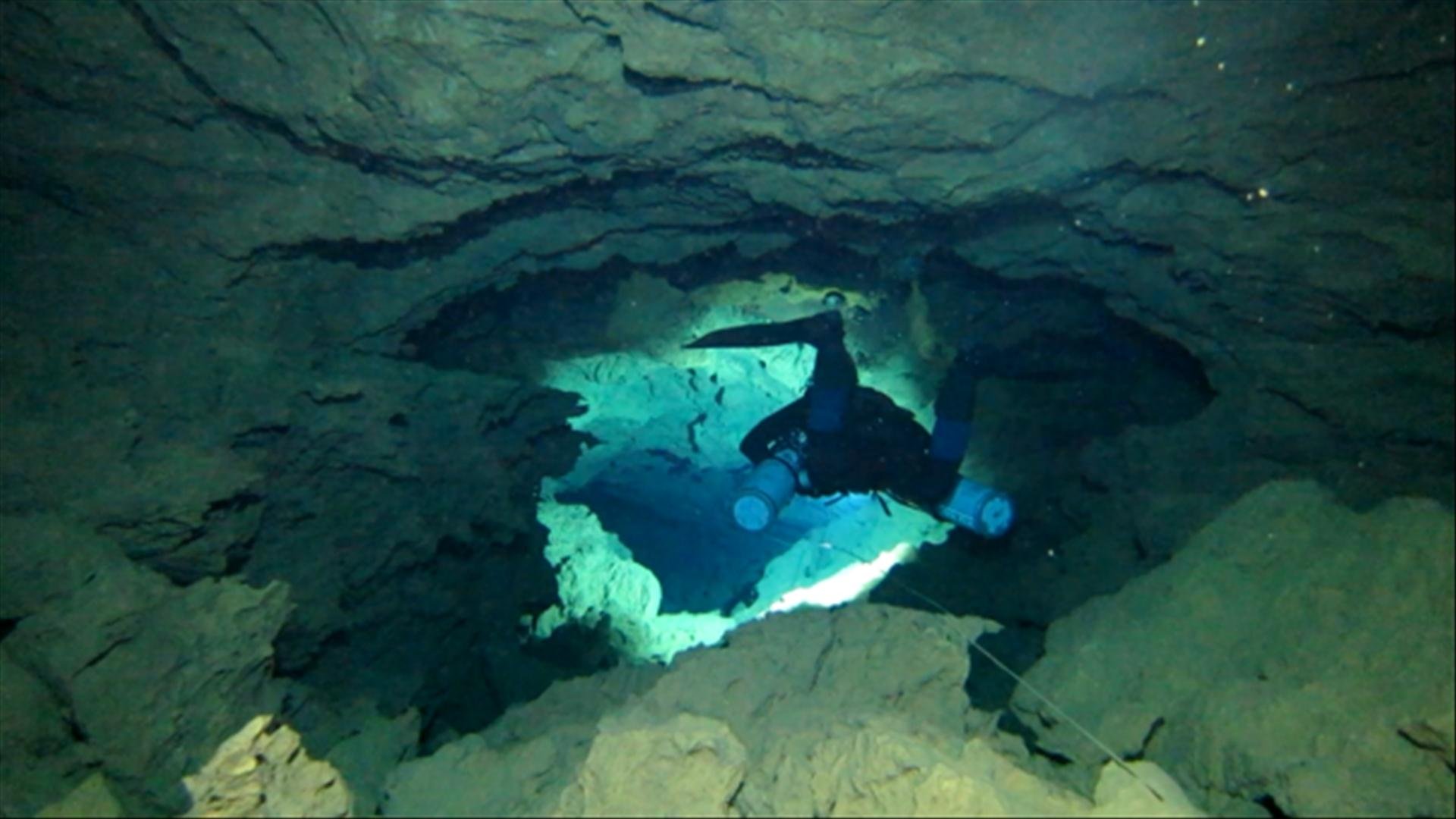
New cave passage in the Event de Perdreau Fourmi, discovered 2012, Screen grab: Christine grosart
Today was an excellent day - but not without a few teething troubles to get around first.
I picked up a missed call from one of my work colleagues, who was asking where I was. France, was the reply. It seems the great shift screw up had raised its ugly head again, but I doubt I have much to worry about as I am certain I booked this leave. In fact, I booked it in January. So, I tried to forget about it and concentrate on the cave diving.
We headed up to the cave and Jean had brought more friends along to help us. They were practising their SRT in the cave which seemed as good a reason as any to come along.

Jean and Claudie helping in the dry cave
Rich and I dropped the pitch and started to get our gear together. Next problem, Rich finds the team spare mask has shattered into hundreds of tiny pieces. It had been in a pocket on one of the harnesses and not protected by a French Pot and had somehow got broken. Never mind. We can live without it and we have another anyway.
The sump is blue and inviting. I get the camera ready and Jean and friends watch us set off into sump 1, before heading out to the sunshine to await our arrival. We tell them we will be 2 hours at most.
Surfacing in the airbell shortly after passing sump 1, Rich and I can't really get our act together and we soon notice a little panting going on. Carbon dioxide. Great.

Chris at the top of the ladder beyond sump 1
We take things slowly and rig the ladder, before hauling the 12 litre bottles up and getting everything into sump 2.
Kitting up in sump 2 was fairly easy this time around and I get ready with the camera. We have a plan to shoot some video of the sump, especially our discoveries from 2011 and 2012. We don't hope for much as it is a small, fiddly sump covered in powder-like silt. But we gave it a go.
We get shooting and with plenty of time and gas, get to photograph and film everything we want to.

Kitting up in sump 2
Then, we had one last job to do.
There was one bit of a chamber left to explore. I had always had a feeling there was more to it than just a boulder pile. So, I dispatch Rich off to take a quick look and a minute later he returned to say it was "Going".
Woo hoo!
Line reel tied in and I sieze the (rare!) opportunity to film exploration in progress.
Rich swam along with his reel and made some nice tie offs and the cave started to head downslope in a fractured, friable passage. It was sculptured and pretty and the water ahead was azure blue.

Chris climbing out of sump 1
Behind Rich it was patchy, rust red and bits and pieces rained down from the roof as the first bubbles ever disturbed the rock.
As the visibility went to zero, I paused at 24m and heard Rich scratching around. I figured he wouldn't be long and steadily, hand over hand on the line, fumbled my way back to the tie off with Rich just behind me.
Happy, we thumbed the dive and had a pleasant swim home in patchy visibility. I stopped to photograph a worm, the type I had not seen before in a sump.
Surfacing back at the airbell, we de-kitted, pleased with the days work.
Not surprisingly, after a recent chest infection and a cold, I had some trouble descending back into sump 2 to get home. Fortunately my bottle of trusty Otravine got me to depth but wasn't keen on getting my sinuses back up again.

Sump 1
It's a divers worst nightmare (well, one of them anyway) and despite hanging around on the way up trying to get my sinuses to let go, it was obvious I was going to get a reverse block.
I did and it hurt a lot, making my eyes water and temporarily blind. Rich took my bottles off and I eventually heard the relieving squeak, followed by some blood and the pain subsided. Not pleasant.
Jean was at the top of the pitch waiting for us as we surfaced. He was worried as we were half an hour overdue. This was probably due to our taking our time in the CO2 ridden airbell. We apologised for worrying him but he didn't mind and we showed him our photos to cheer him up.

Chris holds the empty line reel in sump 2, Perdreau Fourmi
A gang of cavers had showed up to help carry all the gear back in one run, including a very small child who was lugging 2 tackle bags and going better up the hill than I was!
A cold beer in St Jean de Bueges followed by pizza in Laroque seemed a fitting end to a very pleasant day, all things considered. Finally things are going our way.

2011 discovery in sump 2

Sunny Swanage

Tompot Blennie under Swanage Pier. Image: Christine Grosart
I woke early, still thrilled about the night dive the evening before.
The sea at Swanage was sparkling and there was loads of space to park up on the pier. People kept their social distance and I was able to kit up in peace, checking my camera over and over and hoping for a good hour or so to learn more about photographing critters.
I wasn’t disappointed!

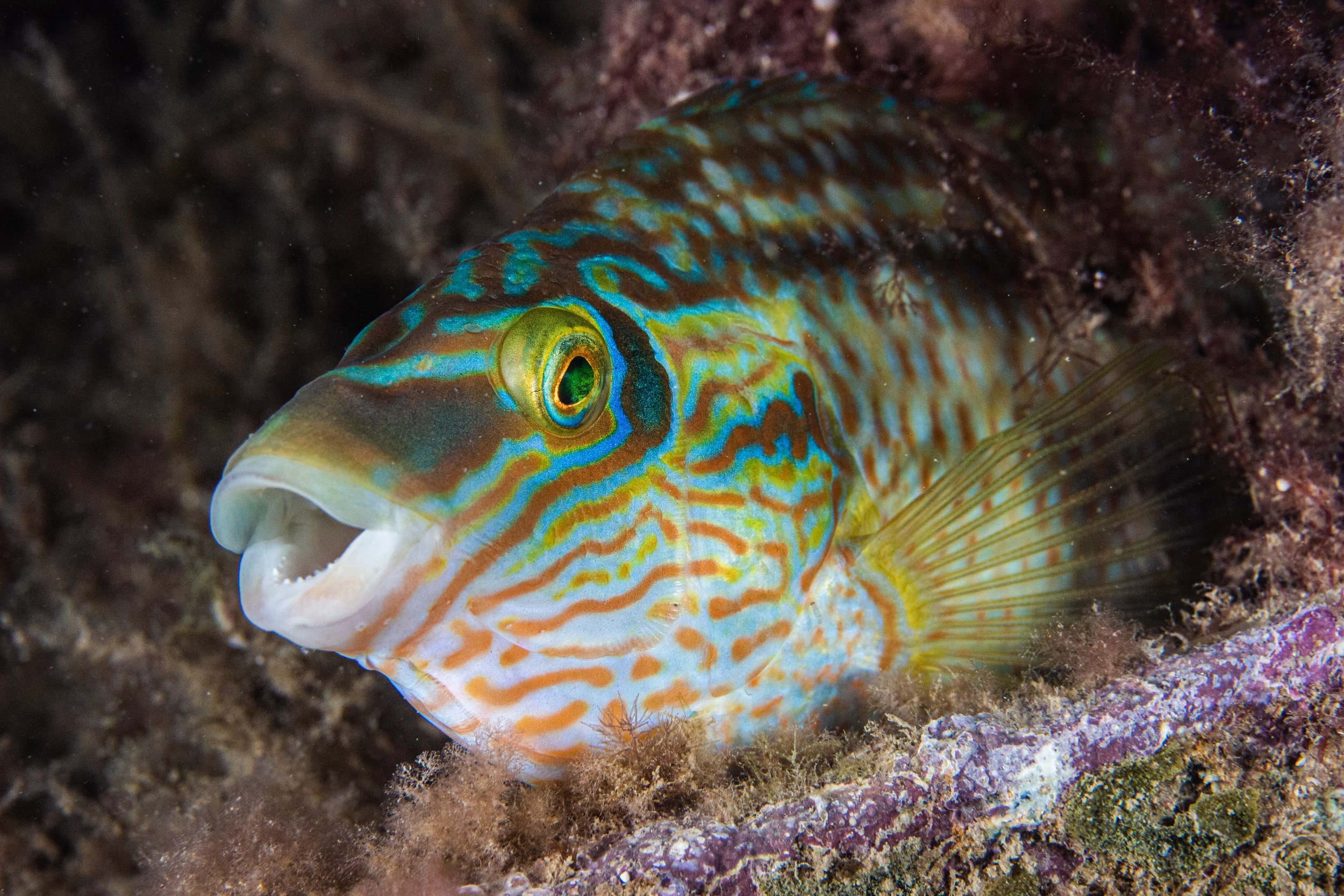


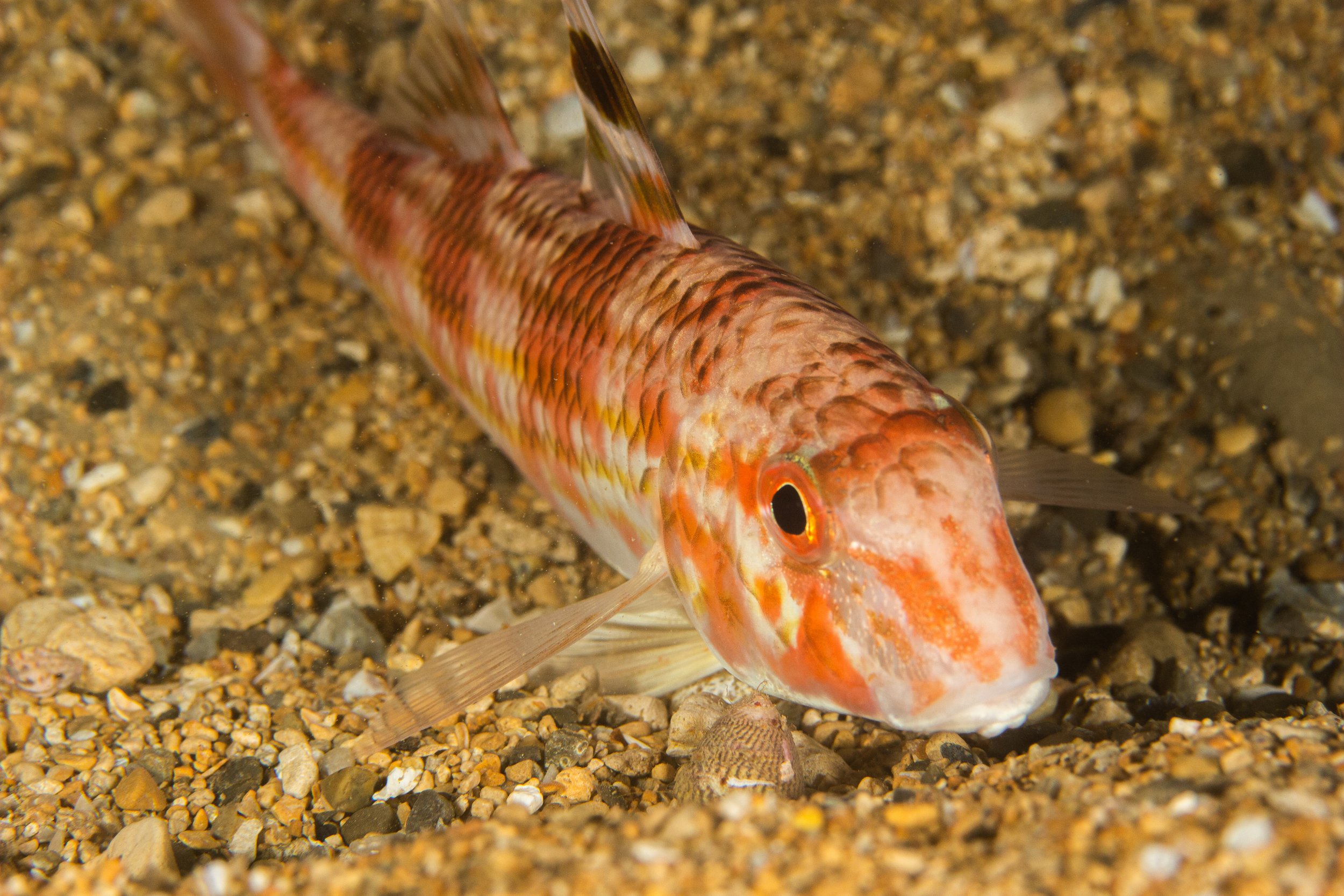

Images: Christine Grosart. Canon EOS 100D, Ikelite housing and DS160/161 strobes, Macro lens.
At barely 2 metres depth it was like being in an aquarium!
Swanage pier was my first proper scuba dive in the ocean 18 years ago and now I was back, taking photos I could only ever have dreamed of.
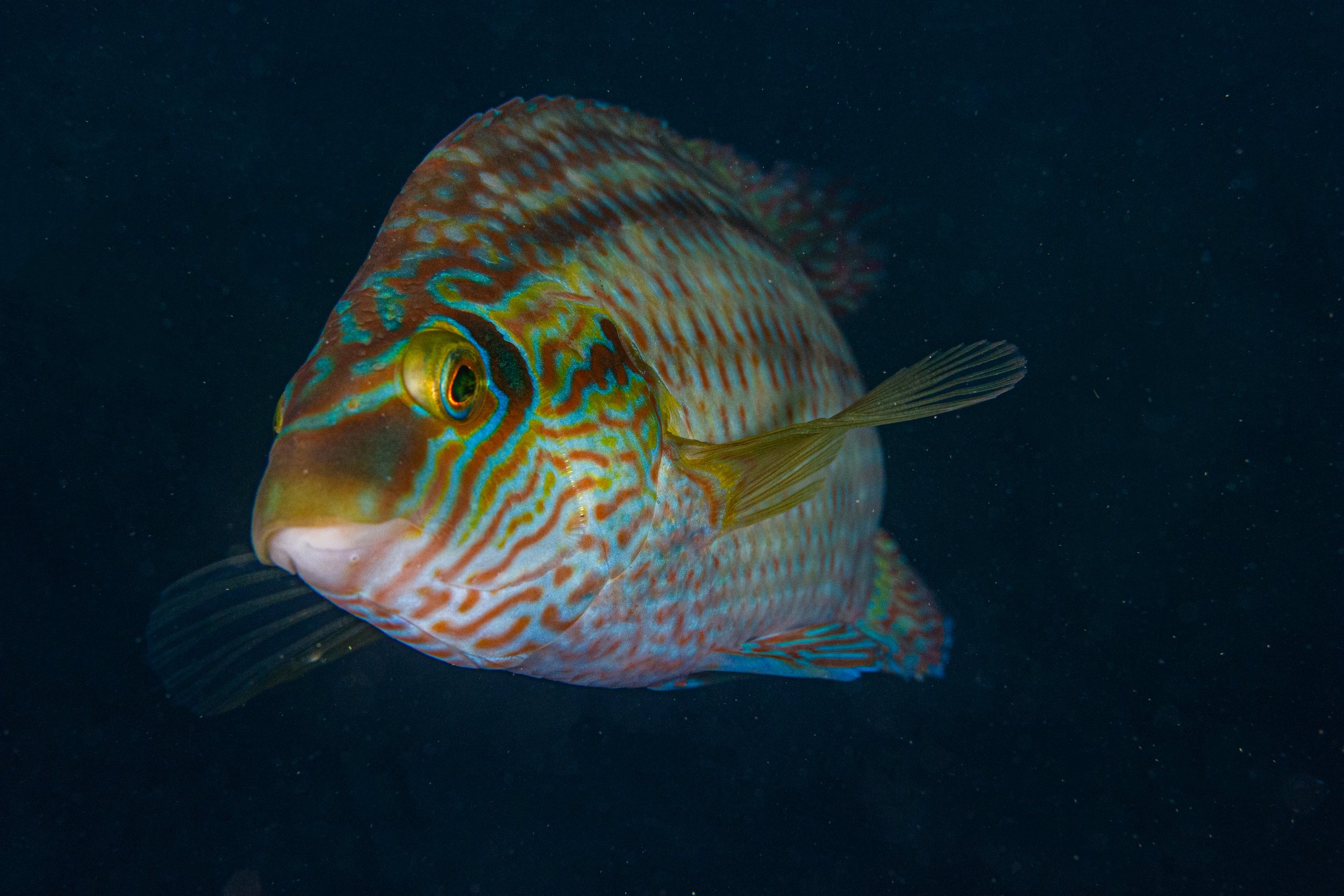
Tompot blennies posed for photos, a corkwing wrasse obliged as well and was very friendly.
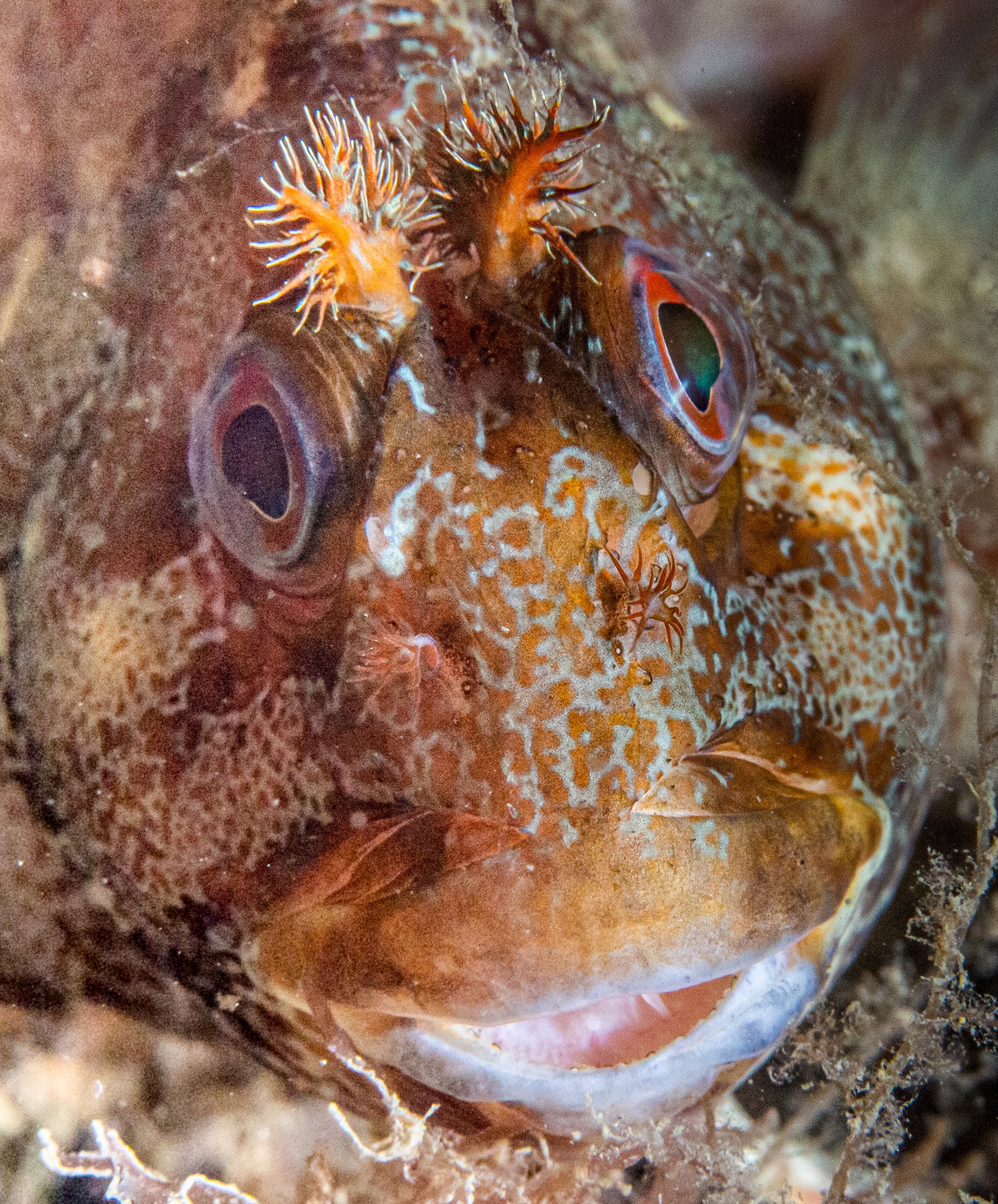
Tompot Blennie. Image: Christine Grosart
I’d forgotten just how enjoyable it is to throw on a single cylinder and jump into the sea right from the shore. Of course, you have to get lucky with the weather and the visibility but this time both were in my favour.
After 90 minutes it was time to get out and check out the images.
I’m learning to love my Citreon Spacetourer which affords me privacy to get changed and somewhere cosy to sit and look through my images and write my blog - just as I am now!

Cuttelfish: Image Copyright Christine Grosart

Macro with Mustard

Sunset over the Moray Firth
2020 has been rubbish for everyone. Well, to be clear, everything from terror, bereavement to annoyance and fury and my favourite one, disappointment.
This year I lost one of my closest friends when she took her own life. She was one of the strongest, toughest women I knew. So there but for the grace of god go any of us.
I was joining in with a British Society of Underwater Photographers (BSOUP) online meeting where we oggle the winners of the latest monthly competition.
That is where I heard about an underwater photography workshop being run in the UK by Alex Mustard.

Alex has a long standing reputation for being one of the best underwater photographers in the world and for once, I was not only available on the dates but had the cash (just about!)
I ummed and ahhed about it, thinking that I was nowhere near ready to be attempting a course for seasoned photographers to hone their skills.
I was barely starting out and really had no clue what I was doing. Rich pointed out that I'd had a pretty underwhelming year and this was my chance to do something fun, for myself.
So, I contacted the agent at Scubatravel who were absolutely superb, especially with the ever present threat of 'cancellation due to covid)' and I signed up.

Scotland
The cool thing about this photography workshop is that it really was remote.
8 hours after I had set off from the Dales following some caving and diving, I was still driving in the dark, howling wind and sideways rain along a single track road with thankfully plentiful passing places and DEER!!!
I slammed on the brakes and screeched to a halt.
There, in my headlights, staring right at me was a big, beautiful stag.
Nobody else was about and through the driving rain I could see him, staring right at me. He stood for a while until nonchalantly wandering off into the undergrowth and the dark.
Thereby followed a hairy drive in the dark and weather, dodging deer a plenty.
Obviously, I had all the wrong lenses for photographing Scottish wildlife above water!
It seemed to take forever to get to Kinlochbervie and then 10 minutes of complete darkness later, the bungalow where we were staying for the week.
We exchanged greetings in a covid fashion and fed ourselves, before Alex set out a plan for the week. We met Chris and Cathy from Kinlochbervie Dive Centre (formerly Northeast Dive) who were our hosts for the week. Cathy is no shabby photographer either! They looked after us well and we were never short of gas, hot drinks and biscuits.
The weather was not going to be favourable and the chances of getting outside the loch to photograph wide angle vistas, slim. But I was on such a steep learning curve I was secretly pleased to just be able to work on my macro.

Sealoch anemone, Kinlochbervie. Image: Christine Grosart
I'm no marine biologist and have a LOT to learn about marine critters. This is kind of cool for me because I get a lot pf enjoyment out of learning about their behaviour, making friends with them underwater and slowing down to a halt to watch their little worlds unfold.
I watched for ages as a hermit crab tried to climb a vertical 'wall' of encrusting pink algae...only to fall off as he approached the top and had to start all over again. He looked miffed.

I watched another hermit crab trying out a new shell for size and a very angsty pair of squat lobsters joining up to defend themselves against me while I tried to get a decent shot.
Then I spent a while photographing two queen scallops when the long arm of a large starfish came into view. My shot was being photobombed by a starfish! I knew as soon as the arm touched the queenie they would be off and, sure enough, the starfish prodded the scallops and they were gone, stropping off into the silt.

Scallop. Image: Christine Grosart
Alex has quite a hands off approach to workshops and you learn things without even realising it!
He ran a lecture most nights, expanding our horizons with ideas many of us hadn't thought of. I was in good company with well established and award winning photographers such as Kirsty Andrews, so we were able to learn from each other too.
Details such as giving as much consideration to your background as your subject, really improved my images. The workshop gave us 'permission' to try things out, make mistakes, get better and the real value was that everybody on the boat was aiming for the same thing and we all had the same agenda.
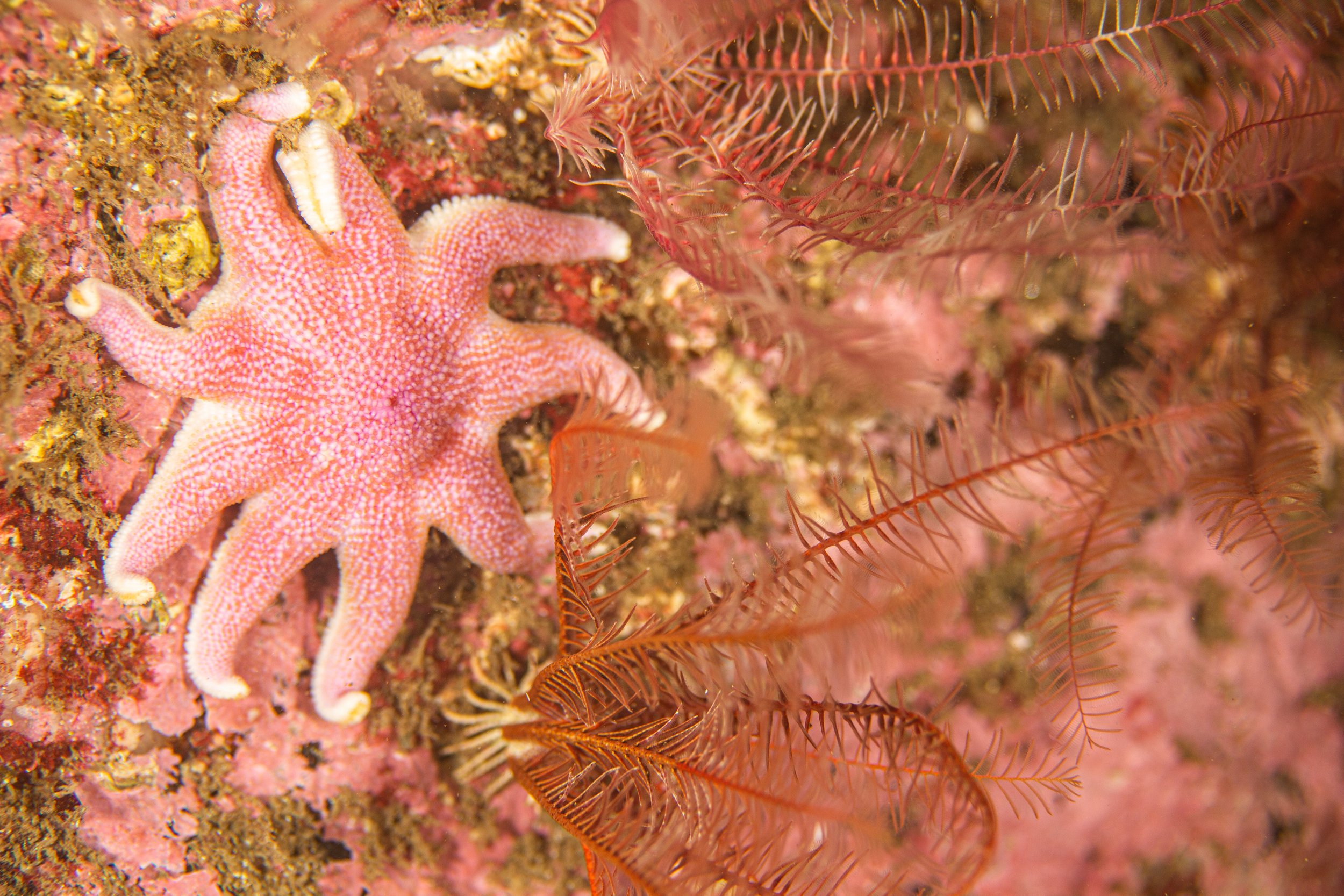
Thinking about the background. Image: Christine Grosart
In the evenings we'd have a talk from Alex and a show and tell of some of our best images of the day.
The logistics meant we could do two dives of at least an hour each day with a decent surface interval back at Kinlochbervie, whilst being back at the bungalow nice and early evening to have the time to go through our images and fettle them.
This was probably the biggest benefit of the workshops. Mostly on diving trips, I can be up until 1am still sorting images from the day, especially on Ghost Fishing missions where the media needs to be out and with the press the next day or even the same day.
My set up is relatively cheap and all but the camera is second hand. I use a cheap, small and lightweight Canon 100D which is use mainly for cave photography.
It is limited with things like ISO but I enjoy wringing out the camera's capabilities which still exceed my own.
I bought the housing from a forum for a steal and then spent the same again on strobes, arms, clamps and lenses.
For this trip I used a Canon EFS 60mm f/2.8Macro USM lens. I have a Tokina fisheye but as we were unable to leave the sea loch to to weather, never got to use it on this course.
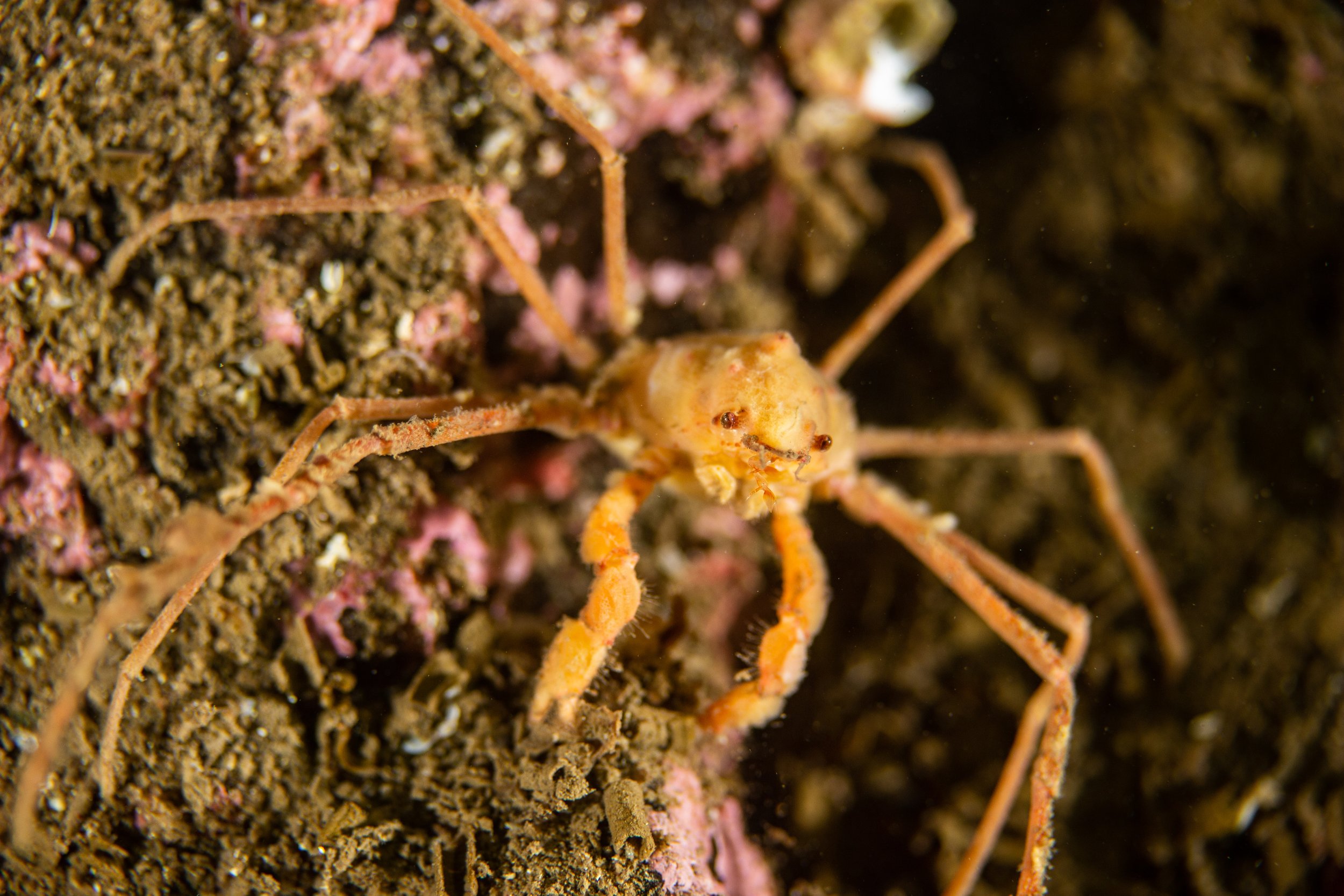
Toady. Image: Christine Grosart
It didn't matter though as I had a tonne of fun with all sorts of creatures, getting closer...then closer still and looking for that all important background.
My photography definitely progressed in only four days and I am so grateful for the opportunity to learn with a true master of underwater photography. I am enjoying so much and cannot wait to get back into the water to get snapping again.


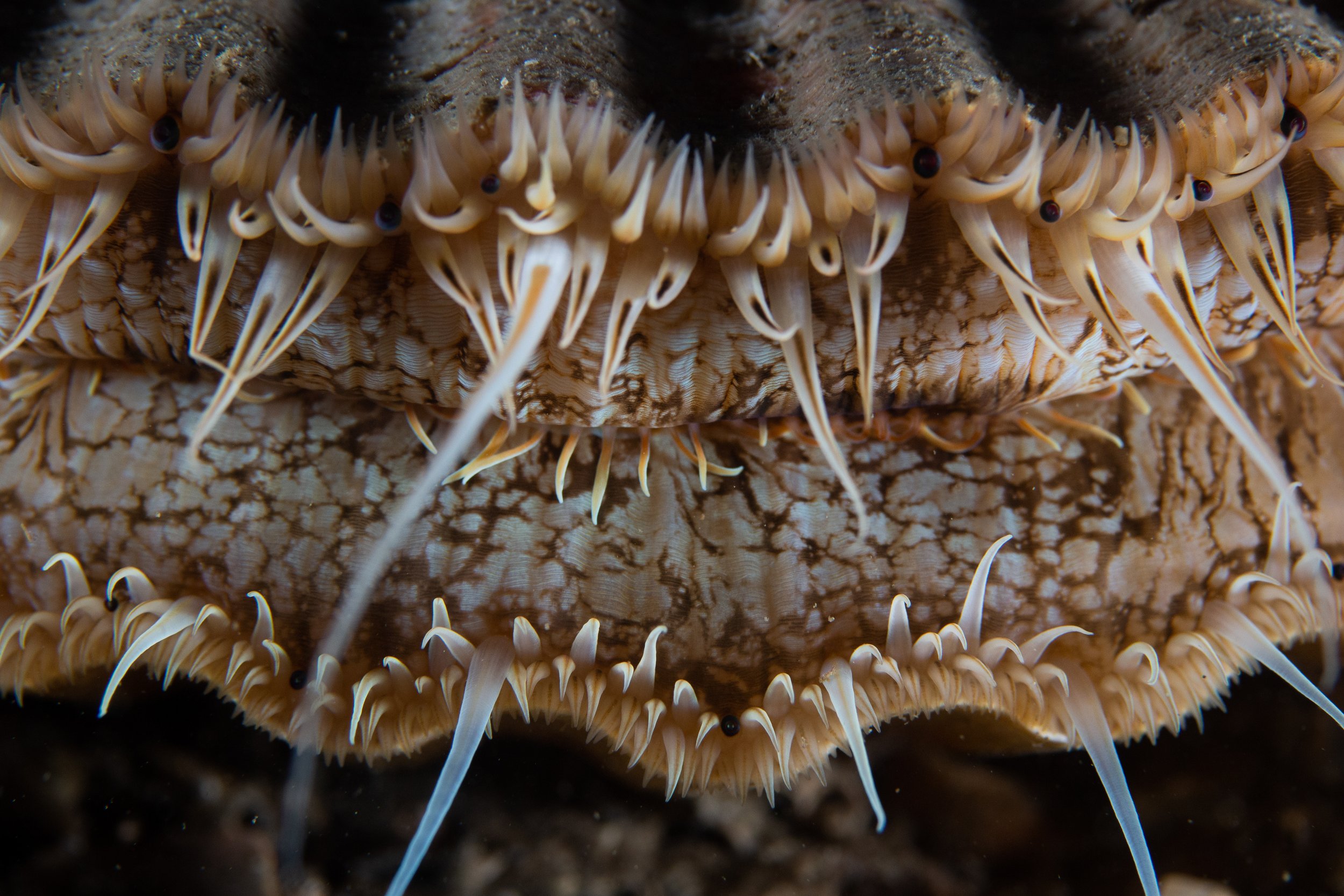
King scallops. Images: Christine Grosart

Hermit crab, dressed for Vegas…Image: Christine Grosart

Dahlia anemone. Image: Christine Grosart


Squat lobsters. Images: Christine Grosart

Feather star. Image: Christine Grosart

Feather star. Image: Christine Grosart

Sea Loch Anemone. Image: Christine Grosart

Not bad for a sh*thole!
Ever since my early twenties I’ve had a ‘target list’ for the year. I’ve never let a year pass me by without aiming to achieve several very cool things.
One such mission has been on my ‘target list’ for over 15 years, rolling over to the next year each time.
Keld Head is an iconic cave dive, which yielded the longest cave diving traverse in the world in 1979, conducted by Geoff Yeadon and Oliver 'Bear' Statham - a notorious duo who were also responsible for discovering several of my favourite cave diving haunts, such as Wookey Hole chamber 24 and Boreham Cave.

Geoff Crossley and Christine at Keld Head
Owing to a myriad of excuses - and I admit to have almost given up on the weather - I had never dived there. Yorkshire is a long way from my home, access to Keld had been difficult and it needed to stop raining for weeks on end. I simply found other things to do, but it never went away.
The world record traverse was eventually superseded by a dive in Florida, USA between Sullivan to Cheryl Sink, which forms part of the Wakulla Springs system.
The two systems are polar opposites in terms of atmosphere, geology and the style needed to tackle them.
I've been fortunate enough to stick my beak into both caves now. I adored Keld Head and it felt homely and familiar.
Wakulla scared the living daylights out of me - it's just a big, black hurricane and I was more than happy to mooch about in the head pool photographing manatees than go much of a distance in.
Horses for courses I guess. Olivier Isler, a record breaking cave diver himself, once said of UK caves:
"I know in England the caves are very small, the water is very cold, and you cannot see anything. Those are very difficult & dangerous conditions.”
To achieve a world record in a British cave is not to be sniffed at.
'The Underground Eiger' documenting the worlds longest cave diving traverse in 1979.
Access to Keld was fraught for many years, including those when I began cave diving and I never thought that things would change during my cave diving lifetime.
They did, a little, and members of the Cave Diving Group began to have tentative access again.

Chris, Martin and Geoff Crossley kit up while Geoff Yeadon watches on.
But that wasn’t the only problem. For most caves in the peat-ridden Yorkshire Dales to be diveable, it needs to stop raining. That’s a hoot in itself, but it doesn’t stop there.
It needs to stop raining for at least 3 weeks. Cave explorer Geoff Yeadon, responsible for both the discoveries and the record breaking first traverses from Kingsdale Master Cave and King Pot through to Keld Head, told me dryly that it was more like 3 months bone dry weather before conditions were tip top.
Given the warmer, wetter weather us humans have caused by global warming, my generation can probably shelve ‘tip top conditions’ for a while.
The longest dive, following Geoff Yeadon and Geoff Crossley as they connected King Pot to Keld Head.
Given the fast changing nature of pretty much everything thanks to Covid-19, I decided to pack my life into my Spacetourer and drive to Scotland to work on the DSV Boka Atlantis. I also threw in my sidemount cave diving kit…just in case!

Geoff and chris getting ready
It would be a shame to drive home past Yorkshire just as Keld Head was in condition - sans diving gear!
I disembarked the vessel and stopped off at my friend and fellow dive medic Danny’s house.
We jumped into St Abbs for a cheeky shore dive before it occurred to me to drop a message to Geoff Crossley, asking if on the off chance, Keld was diveable.
It was - and furthermore, he adjusted his weekend and his family at super short notice to accommodate me and join me in the cave. I’m so lucky to have just the best friends!
Geoff Crossley joined Geoff Yeadon in 1991 to complete the first traverse of King Pot to Keld Head.
As I drove the few hours down to the Dales, I was super excited to learn that Geoff Yeadon himself, now president of the CDG, was going to come along as well to supervise!
We were also joined by Martin Holroyd and after kitting up in the most idyllic setting, the perfect resurgence in the yawning, remote Kingsdale valley, we set off.
The water was typical for Yorkshire, with a yellow tinge from the peat staining. I followed Geoff who navigated the slightly complex entrance series and then headed off up some larger passages, straight into the hillside.
On some occasions I could only see one wall and not the other and before long, I couldn’t see the roof either. It was certainly spacious although the visibility prevented a good view of the whole passage.
After about 35 minutes of swimming, in 7 degrees water temperature, despite not being close to thirds my bladder pressure forced a return. In my haste to pack the car, I had forgotten my She-P. It was time to go home.
We had got about 750 metres back into the cave which is a decent day out for a British cave dive, when we turned for home.
I took a Paralenz on a tray with very bright video lights with me and managed to capture some nice footage of my first trip into Keld.
In my typical style, I’d stashed a mini bottle of prosecco in the head pool for afterwards.
Despite some covid restrictions being lifted, finding a pub that would feed us all was problematic. I was tipped off that my CDG trainee Mark Burkey was in town with his wife Jess, so after some creative phone calls we managed to find a pub that would feed us outside.

Settling down to a beer and fish and chips, surrounded by some of the best people on the planet, I began to realise just how lucky I was and after some of the darkest days of covid, began to see light again.
I pulled out the video footage of our dive for everyone to look at. Describing the dive to Mark, I commented: “And then we got to this junction where Geoff led me up some sh*thole…….”
The table fell silent.
“Some sh*thole?!!” Crossley said, outraged; “That was the main passage!!”
The table fell about laughing and muttered in there somewhere were comments of desperation from the original explorers about not being able to please some people!
Definitely something I will never live down!

Geoff Yeadon, Christine Grosart, Geoff Crossley

National Caving Conference & Thai Cave Rescue

Thai cave rescue team of cave divers.
While we were safely out of mobile phone signal with no internet in Fuzine, Croatia, a situation was unfolding in Thailand that was unparalleled in history. In June, a young male soccer team and their coach had ventured into a cave called Tham Luang in Thailand. It was a common thing to do. The boys left their push bikes by the entrance and headed off inside the cave for an adventure.
Then it rained. It rained a lot and the rain was early.
The water levels in the cave rose and the boys found themselves trapped by rapidly rising flood water and had to retreat even further into the cave to find higher ground.
There, they waited. The eyes of the world was on Tham Luang while the authorities tried to work out what to do.
I wasn’t surprised to hear that key members of the Cave Diving Group, some of whom had experience of underwater evacuations, had been called in.
The rest of the story is well known, so I won’t need to repeat it here.
It was great to see the guys back among their peers at Hidden Earth, the national caving conference and they had a very long, standing ovation from the main theatre which was overflowing.

Thai cave rescue divers from the Cave Diving Group at Hidden Earth 2018
With some help from some friends, we ran a try dive session in the pool and also won the ‘Best stand’ award of the conference for the Cave Diving Group.
Several months later I was quite surprised to receive an invitation to Westminster for one of many events celebrating the successful rescue of the 12 boys and their coach.

Confused, as despite being the CDG foreign officer, I’d been out of phone contact at the time and can safely say I’d had absolutely nothing to do with the whole affair – I replied thank you but I think the email has been sent to me in error.
I received a reply that the invitation was intended for the ‘great and good’ of the Cave Diving Group and was our opportunity to honour the guys that had rescued the children. An event for their peers, if you like.

It sounded like it would be a nice event and not something that happens every day.
I jumped on a train to London and we had all been put up in a swanky hotel before taking over the whole of Prezzos for a cracking evening and a great opportunity to catch up with friends, some of us who hadn’t seen each other for years.
The poor couple in the corner trying to have a romantic dinner for two must have wondered what was going on and how they ended up in the middle of this riff raff. I often wonder if they ever worked out who the guys were that stood together to have their photos taken.

The next day we had an invitation to drink the speakers chamber dry and eat all their food. Mr Speaker, Rt. Hon. John Bercow gave a good speech and we were given a tour of the houses of parliament before making our ways home.

Several months later, I was contacted by a member of Coventry BSAC who asked for Rick Stanton’s details as they wanted to make him an honorary member.
Rick had been unofficially “borrowing” their pool for years and now it looked like he was set up for life!
Rick graciously accepted and went to the dive club’s AGM dinner.
At one point in the evening, the compere asked what was the most unusual thing anyone had ever found underwater.
Rick put his hand up immediately and said “12 boys and a football coach!”
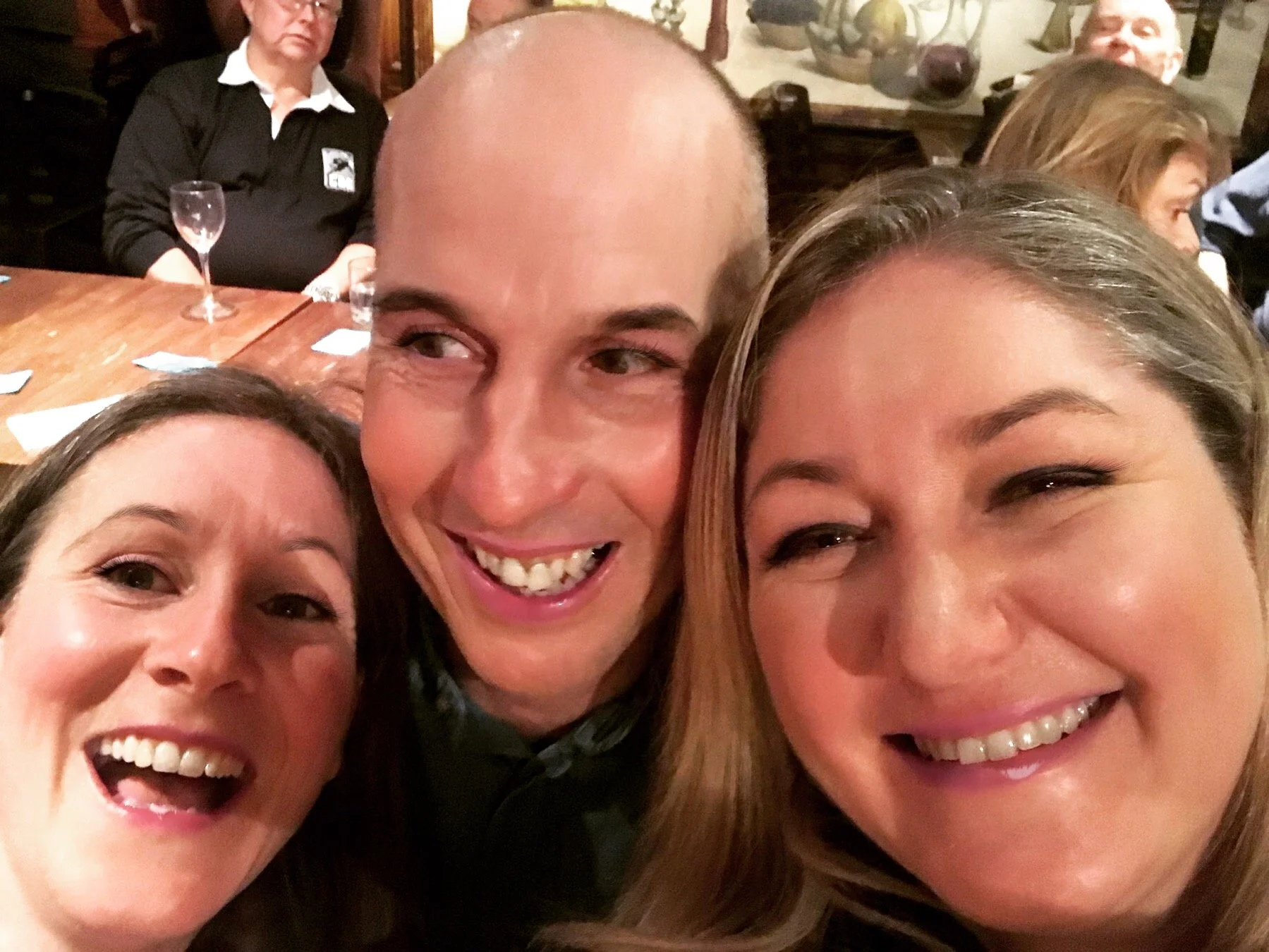

Emme Heron, Rick Stanton, Christine Grosart, Clive Westlake, Jim Lister.

Beautiful Babbacombe
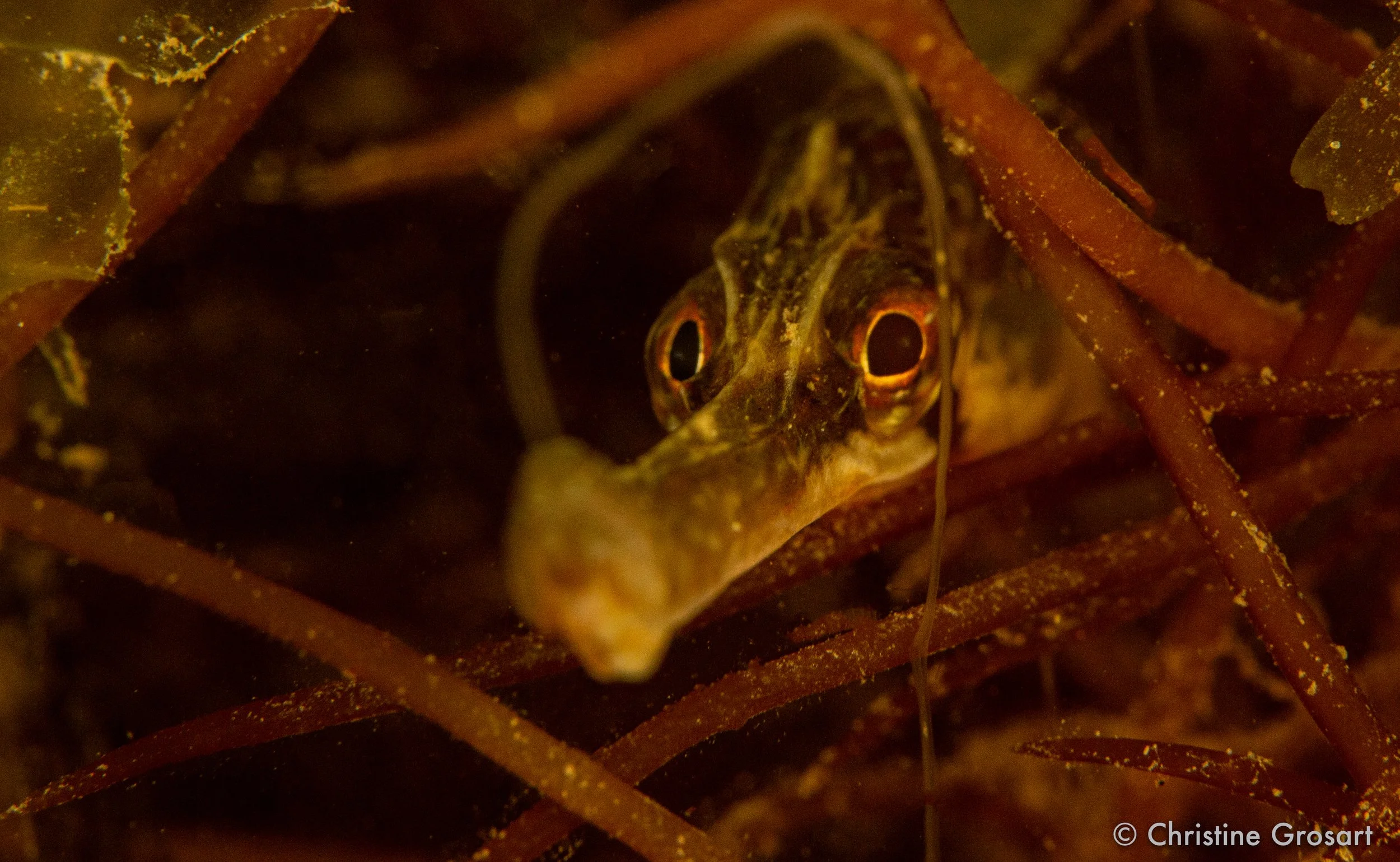
Pipefish. Image: Christine Grosart
Shameful, I know...but I had never dived Babbacombe!
Either the wind was going the wrong way, the visibility too poor, too much rain, waves breaking over the wall into the car park, too many people...
The list of excuses is endless.
But finally. I had some time at home, in the UK and in SUMMER!
This never happens AND the divers from the Facebook group South Coast Divers had been putting up some cracking images of critters down at 'Babbers' as it's fondly known.
I was fortunate to be welcomed by three people I had never met before nor dived with but we all had something in common - squidge!
Squidge is a diver's slang for marine animals. As opposed to spidge, which is wreckage.
Someone once pointed out that with regard to UK wreck diving, you can get the same effect walking around your local scrapyard at night, in the fog with a rubbish torch, in the rain!
There have seldom been times when I could argue with that. Triple expansion engines don't interest me and why is everyone so obsessed about boilers?
No, despite trying to fit in with the crowd, I'm afraid I have to admit to being a 'squidge' person.
This was evident when I spent an entire dive in Scapa Flow photographing starfish on the seabed and making scallops swim - they are so funny!
That evening in the pub, someone asked me where I had dived. "Markgraf" I replied.
"Oh" he said "See any nice scallops?"
I digress.


Jewel anemones and nudibranchs. Images: Christine Grosart
Anyway, off I went down to Babbers and needed to find somewhere to doss overnight. Covid makes things tricky but I did find a prime spot where overnight parking is allowed and the morning view is to die for.
I woke to the most glorious sunrise and the waves gently lapping only yards form Agnetha.
I made myself a strong coffee and had light chit chat with passing dog walkers.
It was time to pack up and head round to Babbers to meet Tamsyn, who had volunteered to show me around. Lisa and Richard Frew from Dive South had also come along for their first time at Babbers.
I'd had some fun building a single cylinder set up as I rarely dive anything other than my twins, sidemounts or CCR. But as we were only going to about 6 metres all that seemed rather overkill.
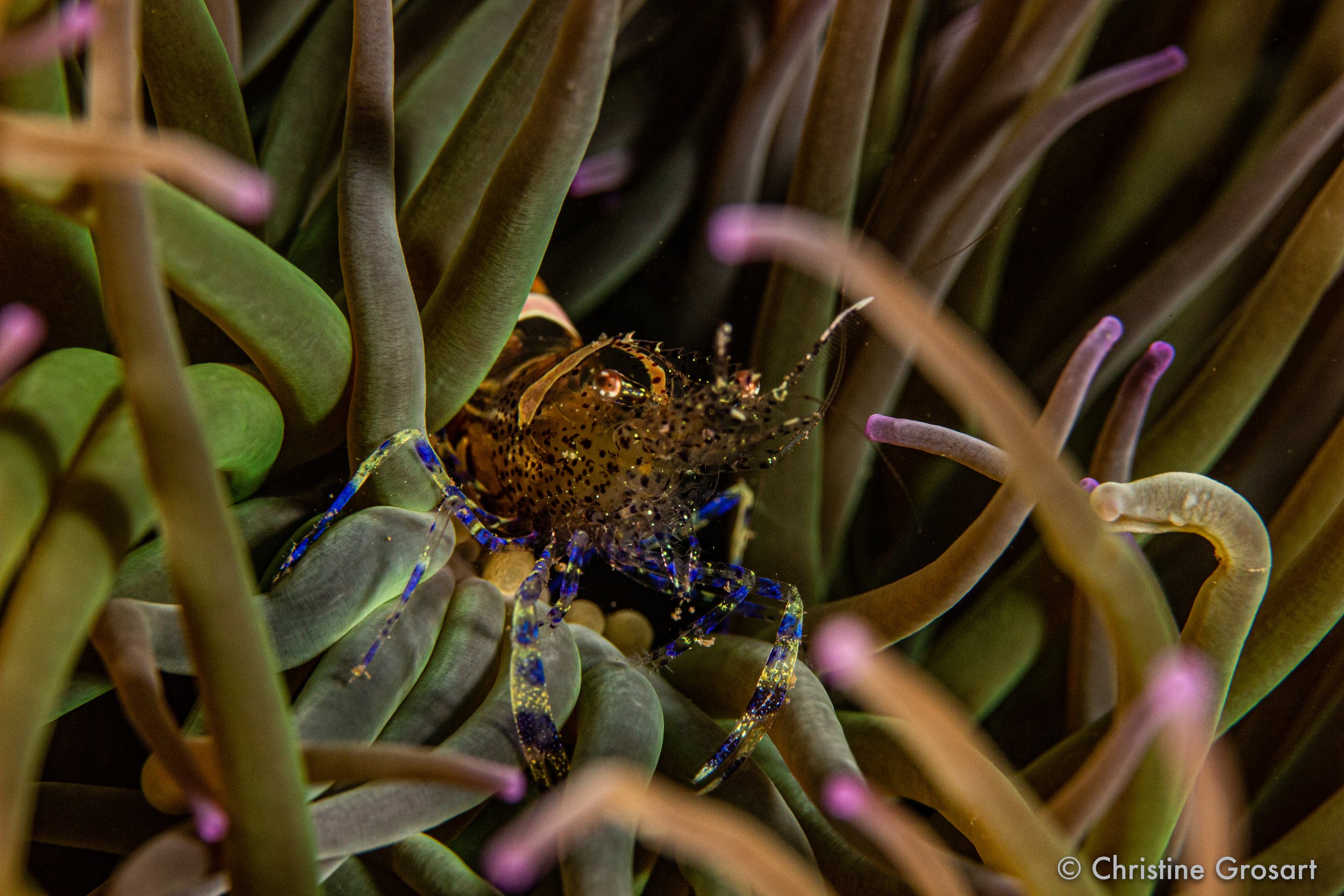
The super-hard-to-spot Snakelock anemone shrimp. Image: Christine Grosart
The sea was sparkling, the coffee shack was open and although it was busy with families and anglers, the atmosphere was friendly and folk kept their respectful distances. For just a couple of hours, we could drop beneath the waves and leave covid behind.
After an excellent location brief by Tamsyn, we walked to the end of the jetty and were accosted by a grey seal who was obviously hanging around the anglers hoping for some fish.
He'd got too brave for his own good and was sporting a hook in his mouth. He was close enough as we put our fins on that we could smell his fishy breath.
We got in and he soon vanished.
The visibility was about 8 metres and it was great to be diving with likeminded people. I was on a mission to take some nice macro shots and so were they. I was also keen to do some Seasearch recording. I love the way that just a simple, shallow dive can contribute to citizen science and even go some way towards creating MCZs.

Pregnant variable Blenny. Image: Christine Grosart
The snotty water and kelp soon gave way to a shallow reef and this was teeming with life. The usual Tompot blennies made an appearance but apparently I photographed one special little critter without even realising it!
The Variable Blenny has apparently been absent from our waters for several years. At least, there had been no positive ID of one since around 2007.
The South Coast Divers group, many of whom were keen Seasearchers, had been doing plentiful shore diving during these covid times and Variable Blennies were seemingly back in town.
And they rather liked Babbacombe!
For those not in the know, Seasearch changed my life. Well, that may seem an exaggeration but for a cave diver who gets easily bored in the sea and disappointed on almost every dive by 'only' seeing just kelp or weed or rocks with 'stuff' on them then well yes, you can see why I got a bit disillusioned with diving in the sea.
It offered me very little challenge and I found wrecks creepy and a bit boring.
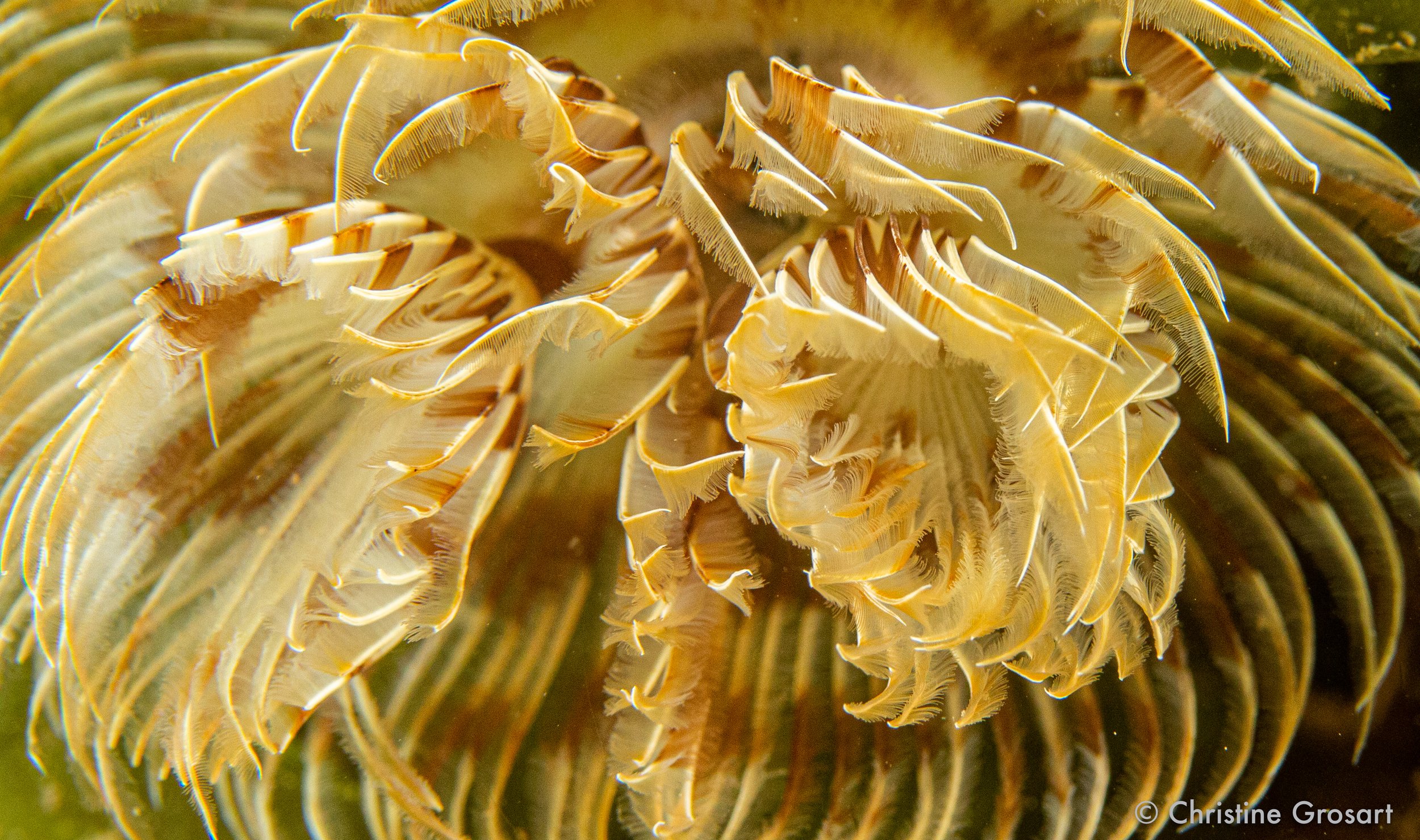
Double spiral worms. Image: Christine Grosart
Then I did a Seasearch Observer course and my whole world changed.
National Seasearch coordinator Charlotte Bolton once said to me:
"Call me sad - but I love ALL my dives".
Rubbish, I thought. You must have at least one or two crap dives.
"Nope" she said "I love all of them."
How was this even possible?
The Seasearch course opens your eyes. It makes you look, Then look again, Then look closer again and before you know it you are analysing seaweed 'feet' and arguing over the markings on a corkwing wrasse.
An octopus could be dressed in a grass skirt and playing the maracas right in front of you but you'd probably miss it because you were trying to decide what length of 'animal turf' to put on your form.
In fact, no, you wouldn't miss it. You would simply enter it as 'rare' and gloat about it on your cephalopod reports - complete with photo.
Oh, it changed my life alright and it definitely changed my diving. It gave me a new lease of life and I spent every day offshore dreaming about not only taking macro photos of cool stuff but sifting through marine critter ID books and filling out Seasearch forms in latin.
I don't know what has happened to me but I like it. Diving for a purpose rocks!

Velvet swimming crab in a snakelog anemone wig. Image: Christine Grosart
I still can't tell the difference between a crab and a wrasse but I do love pretending I can and it is quite satisfying when someone tells you that you've photographed something quite rare when a) You couldn't take a photo of a fish at all last week and b) you had no idea what you were looking at and thought they were just everywhere!
Tamsyn very kindly pointed out a pipefish to me once I'd packed my camera away. She felt bad so pointed out another one on our second dive post coffee and sandwich.
He obliged beautifully. Their snouts are so long they are a pain to get in the frame and in focus, hiding in all that weed.

Pipefish. Image: Christine Grosart
We headed for Mushroom Rock which is, no surprises, a large mushroom shaped rock right in the middle of the bay. Underneath, it is adorned with jewel anemones. These are my new favourite things to photograph. All colours, pinks, greens, purples, yellows...just stunning.
I inspected every damn snakelock anemone searching for the fashionable 'anemone shrimp'. This elusive shrimp likes to hang out in snakelocks and has kept macro photographers sane throughout covid.
I hunted religiously through every patch of snakelocks, going over and over in my head that it takes determination and hard work to get that photo you want and nothing comes easy on a plate and OH HELLO!
There he was.
I managed a few quick shots and signalled frantically to the others, at which point he turned his bum on them and hid in the most awkward place, almost impossible to photograph. I think Lisa got a few but he really was a bit camera shy.

The super-hard-to-spot Snakelock anemone shrimp. Image: Christine Grosart
Velvet Swimming Crabs like to wear snakelock anemones as wigs and they made for some amusing photographs.
I had a fantastic day with such lovely people and definitely got my photography and Seasearch fix.
I'm chuffed to bits with several recent purchases. My Ikelite housing was bought to accommodate my Canon 100D DSLR camera and I bought some second hand Ikelite strobes, DS160 and DS161.
I was debating for a while about a Cinebag Grouper, which seemed like a nice idea but quite pricey for what I thought was just a cooler bag with a badge.
I took a punt and bought one.
How wrong I was. The bag is sturdy, well padded and well thought out, with waterproof inner zip pockets and it is heavy duty. I keep an old sofnolime can full of fresh water in my car and you can use the Cinebag as a rinse bucket.
It takes up little space in my car and protects my equipment on the boats. I love it.
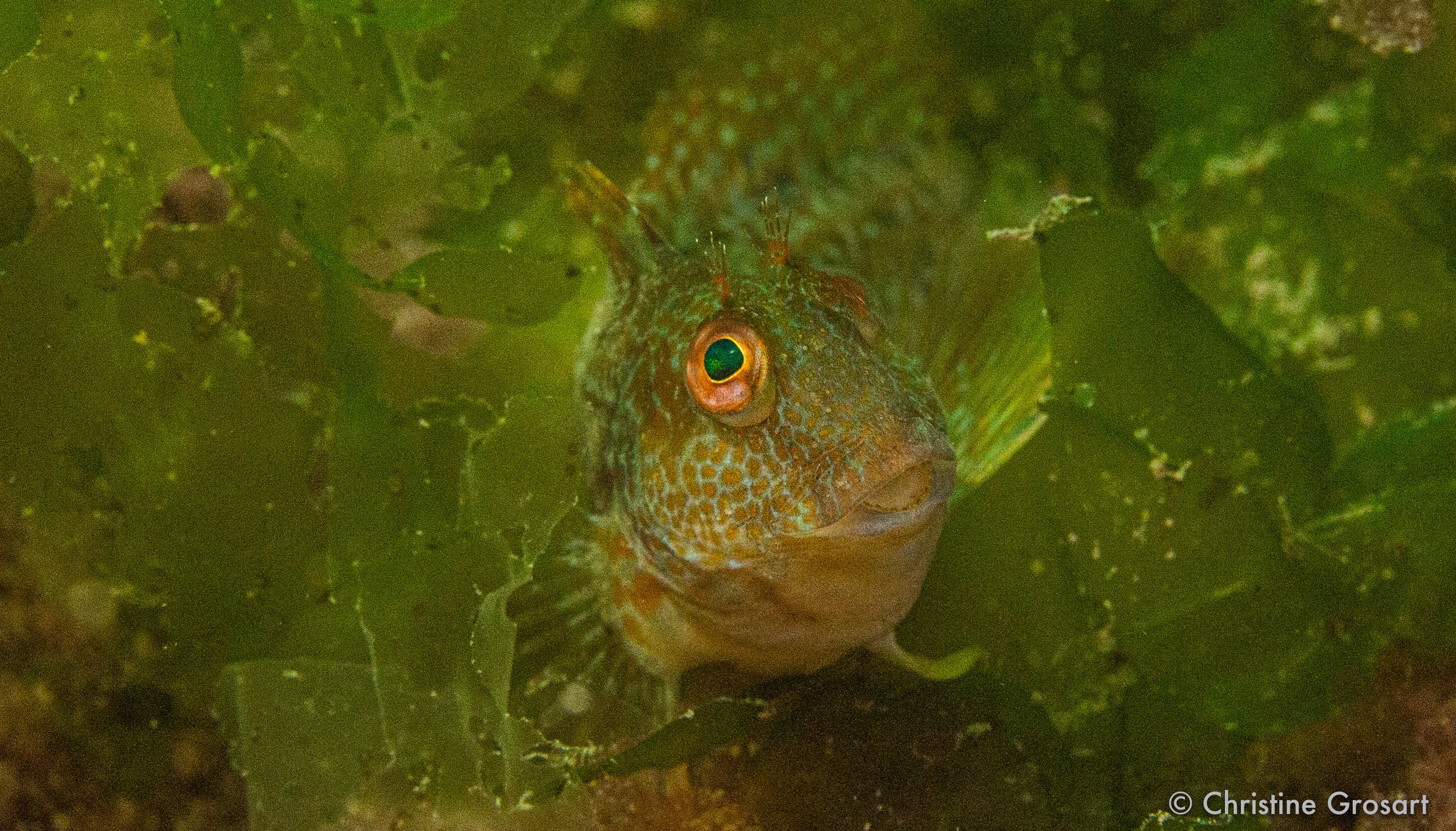
Blenny. Image: Christine Grosart

Lobster. Image: Christine Grosart
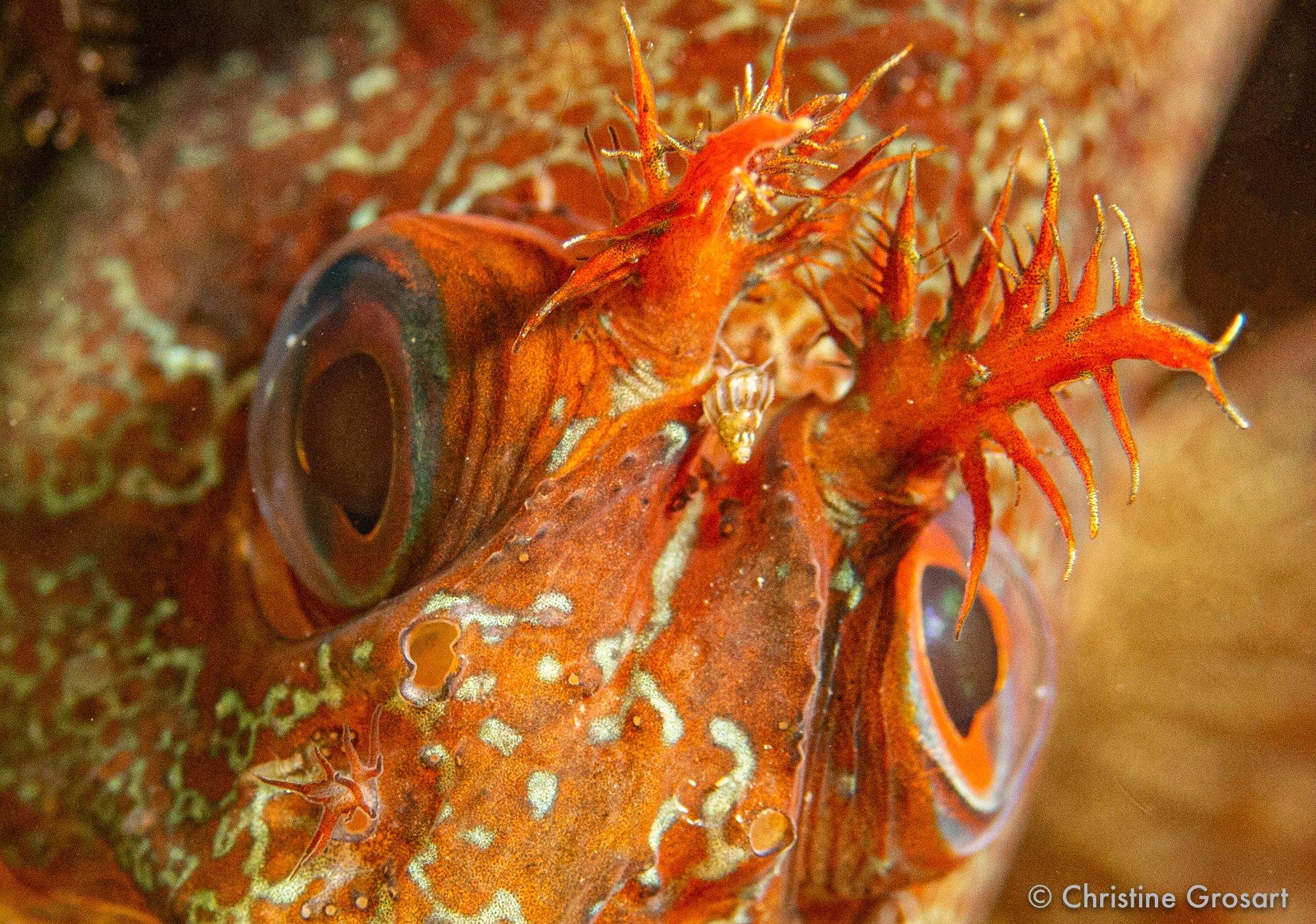
Tompot Blenny. Image: Christine Grosart

Pipefish. Image: Christine Grosart

Pretty Persier
The lock down hokey cokey was starting to take its toll this summer, I’m sure, for all of us.
I had booked some blue shark snorkelling with Indeep as a ‘salvage the summer’ attempt but the weather ruined it and we couldn’t go.
So, with Rich around for a couple of days we made a last-minute booking on a couple of days diving down in Plymouth.
I decided to take my KISS rebreather because I hadn’t taken it in the sea much and, well, I should really. It was only ever bought for caves, but I decided to expand my horizons.
To make life even more awkward for myself I threw the DSLR in as well and we decided to camp using my new van awning.
Of course, it rained. Non-stop. The BBQ coals that we picked up were damp and after 2 hours of trying to make fire (all the pubs were full, before you ask…) Rich finally managed a decent meal. It was cold and wet and pretty miserable. I was enormously grateful for my Fourth Element poncho which made putting up a tent in the rain significantly more bearable.
We rocked up at Indeep who provided the usual excellent service in gas and boats. We headed out to a wreck I’d never been to before - le Poulmic. Very small but teeming with life. The weather topside was what we call ‘lumpy’ and we were grateful to be beneath the waves rather than on the boat.

Christine diving the Persier
In the afternoon it was a classic bailout to the James Egan Layne. Each time I dive this wreck (mostly pulling ghost gear off it, to be fair) it looks different. Rich had a great time with his camera while I struggled with not-very-good macro.
After a damp night in the van, the weather had improved greatly, and we headed out to the wreck of the Persier. I was excited as I’d never dived it before, and the visibility looked promising.
I gave myself a break and took the Paralenz dive camera. I always find shooting video way easier than images!
The wreck was stunning. We could hardly see it for fish. Great for critter nerds like me but not so great for wreck photographers like Rich, who spent much of his time shooing them away!
The wreck is adorned with pink sea fans and made for great wide-angle shots with Rich’s canon DSLR and new Easydive housing.

Christine diving the Glen Strathallen
In the afternoon, we dived the remains of the Glen Strathallen.
In typical style, Rich and I got distracted by a lost creel that was still catching. He set about freeing the resident spider crab while I filmed. We just can’t help ourselves!

Event de Rodel
Today we had plans to go the Event de Rodel.
This pretty little gem of a cave is one of the easier ones to access, but still requires a carry and some crawly, stoopy caving to get to the waters edge.

Andras in the Rodel
It was a much easier carry this year and all except Andras opted to dive in wetsuits. The gear was carried through scratchy scrub a short distance through bushes and up a short, dry riverbed. We then changed into caving grots and chained the five sets of diving gear to the start of the sump.
It soon became apparent that my trainee, Jarvist, was capable of shifting twice as much gear as everyone else in half the time - so we blundered along and let him get on with it!
We were a little alarmed by Andras' 10 litre cylinders, so he devised a hardcore technique for carrying them through the cave!
Even more alarming was his sidemount set-up - which had clearly been designed by someone who had never been in a dry cave in their lives, never mind had to carry diving gear through one!!
Andras watched in awe as Rich and I glided through the water easily in our minimalist UK sidemount set-up. He'll be borrowing one of ours tomorrow to see how he likes it.
The Rodel didn't disappoint and I shot some video of Rich and Andras, which had pleasing results - except the LED torch was causing red dotted stripes due to a problem with certain power settings. I couldn't fix this underwater so we had to make do with what we ended up with.

Source du Sorgues - The Picnic

Chris in the Sorgues. Image: Richard Walker
The Sorgues is in Aveyron and is a great little cave to finish the trip with.
We invited Mehdi Dighouth to come over for the day and Rich and I set off to the cave to have a picnic before diving.
Oz and Joe set off to the Durzon - because their instructions had the GPS co-ordinates mixed up!!!!!
The Sorgues is a beautiful river emerging from the cirque rockface and feeds the fish-farm just downstream. It used to be the case that divers were asked to hose off their drysuits before entering the water but now the fish-farm seem not to care and divers are welcome here.
We settled down to lunch by the weir and Mehdi produced some home-made Fois Gras and some fruit jelly thing which was amazing.
We were still waiting for the others to show up and without a mobile signal here, wondered just how long we should wait. Rich still needed fills from the compressor so couldn't dive with me until Oz and the compressor arrived. It was decided that I should go for a dive with Mehdi and Rich could dive with the others when (if) they showed up.
Mehdi and I set off through the maze of boulders and concrete tunnels which fill the entrance. I first dived here in 2007 but didn't remember much about the cave as I was pre-occupied with a top-heavy independent twinset, having moved from sidemount to backmount gear myself, without any advice or training. I was uncomfortable throughout and didn't enjoy the dive.
It was great this time to know that I could just get on with it and relax.

Chris in the Sorgues. Image: Richard Walker
We dived to what I consider the end of the cave. The main, spacious passage just ends and the way on is a small, narrow rift which goes up to about 3m depth from 31m and nobody has been any further. It is reported to be tight, nasty and a dead-end boulder choke - so we stay in the big stuff!
With loads of gas to spare, we turn round and I get the opportunity to waft my HID around and have a real good look at this cave. The geology is beautiful and there are ribbons of calcite protruding like a dragons back all along the edges and the floor. The water is typically clear, with a blue tinge and no decompression is required for such a short dive.
We surface to see that the others have arrived and Rich is getting his cylinders filled. Elaine and Duncan set off for a short dive and Elaine returns with plenty of gas, so I offer to take her in again behind the filming crew. Rich, Oz and Joe have a lengthy dive briefing for the camera work and Mehdi sneaks in for another dive behind them. Elaine and I stealthily follow them all and we are treated to a fantastic view of four divers, all with bright filming lights and HIDs, spread out down the passage. Elaine is thrilled with her dive and we call it a day.

The wonderful Sorgues. Image: Rich Walker
Mehdi returns and gives me an impromptu lesson on his Megdalon rebreather. I always said I would never go over to RB because there is so much I can do on open circuit to last me a lifetime - and I haven't got anywhere near my limit of open circuit yet. But maybe in ten years time I may think differently.
We end the day with much giggling and silliness as Joe asks Mehdi for an interview about the Esperelle. Both Joe and Mehdi are extremely professional - you get the feeling they have both done this sort of thing before....I am in the background asking Mehdi questions in French and the video looks amazing.
Then it's Rich's turn to be in front of the camera and Joe's techniques for shedding a little golden light on the subject has us in stitches.
All too soon it is time to go. Mehdi has to go and give a talk at the speleo congress and we have to shoot off as we've been invited onto the Hortus Plateau - aka middle of absolutely nowhere - by the CLPA for a pizza party!

Christine, Mehdi, Elaine, Osama, Joe, Duncan, Rich

The seven hour lunch

The impressive Millau Bridge
We arrived at the camp site in one piece yesterday. The tents are up (one for us, one for the gear....) and shopping done.
I'm still sick with some sort of chest infection off the back of a cold, so today we tried to take it easy.
I had a phone call from my good friend Jean Tarrit to tell us he was coming to our campsite and we were to have lunch at his house in Larzac to discuss plans for the two weeks.

Jean Tarrit
Fuelled with coffee and coughing like a donkey with asthma, I was driven via some stunning scenery to Larzac - the long way round as the Gourney's are closed for repair work in the Vis gorge.
The drive took ages but we finally met up with Jean and headed to his house.
It was a beautiful, typically French rustic country home with big beams and huge fireplaces.
We were spoiled from the outset with several courses, including crevettes (shrimp), magret de canard, sautee potatoes, salad, bread, cheese, tarte au poire and a 12 year old Bordeaux.
Many hours later we went for a short wander to take a look at the view over the Larzac plateau which is cave hunting heaven.

The viz gorge, Herault, France
Back at the house, we discussed the geology of the caves we were pushing, fault line directions and made plans for the week. Rich let out the occasional snore as he nodded in the armchair.
The plan is to go back to Garrel on Saturday but this depends on me being well enough and we can put it back a week if we need to.

Amazing Annecy
“The Marmots were singing, the vultures circling and I froze my a** off!”
Sometime in the early 2000s, en route back from the epic Dent de Crolles cave system in the Chartreuse, France, we swung by a town called Annecy.

Lovers Bridge, Annecy, France
It frankly, took my breath away. A clean, cosmopolitan town with tree lined streets casting gentle shade over the many restaurants and bars, over looking a warm, mountain lake with a mountainous back drop. The canopies of parapentistes circled the mountain slopes, dormant ski lifts awaited winter and water skiers zoomed about all over the lake, dodging pedalos with beer swilling tourists.
It was idyllic and I vowed to go back.
It was almost 20 years before I did.
With a triathlon looming, what better excuse than to train for it on the banks of the stunning lake Annecy.
I was delighted to join a new vessel and a new company after the Licanke expedition. The Seven Atlantic is well known as one of the best flagship saturation diving vessels in the north sea. She didn’t disappoint. A friendly crew and lovely working environment, with a great back-to-back – I was able to settle into my training without issue.

In the queue for France
I couldn’t find anyone who wanted to come with me to France at short notice. The upside was, it left me free to do whatever I wanted, whenever I wanted.
I loaded my van with a sea kayak, bikes, swimming gear, camping gear and pretty much anything I thought I might need. It was weird going to France without any diving kit.
Figuring as a free agent, time was my own, I saw no reason to bomb it straight down to Annecy. Besides, campsites have weird opening and closing hours there so it made sense to arrive in daylight and not be trashed when I got there.

My Orro gravel bike in the champagne region of France.
I was super motivated – captivated even – by the Tour de France Femmes. It had been some 30 something years since it had been allowed to take place. One of the stages passed through the champagne region of France. A quick search on Komoot and a few emails to the Epernay campsite and my plan was forming.
I set up shop at the campsite after an uneventful journey and planned my ride for the next day.
The route was 45 miles or so and took in all the famous vineyards such as Bollinger and Moet & Chandon.


It was warm, sunny and there were a few tell-tale signs of the tour that had passed through a couple of months earlier. I was super grateful for the municipal water fountain which also doubled as a book swap library!
The route was somewhat lacking in cafes, so by the time I got back to the campsite on just an energy bar or two, I was ready for a good feed.
On the advice of the campsite owner I was directed away from the pizza and frites I had been longing for and instead ended up in the best rated restaurant in Epernay. It didn’t disappoint I have to say.

I got on the road the next day down to Annecy and checked in at the campsite. The sky was a little moody and being September, the weather had started to become a little unstable.
Warm, sunny days were met with windy, thundery nights, sometimes with some serious mountain lightening storms.
It was during one of these evenings when the temperature dropped and the wind began to pick up, my fellow campers and I treated ourselves to the local burger van.

Campsite by lake Annecy
As I tucked in beside my awning, a lovely Welsh couple sheepishly wandered over to me. Looking up as they approached, they said "Um, I don't suppose you've heard?" They looked sombre.
"Oh" I said "Has she, ummm....."
They nodded.
The Queen had passed away. The mood on the campsite was strange. It was peaceful, people of all nationalities stopping to chat to each other - and several of us cracked open a bottle of something fizzy that we were keeping aside for some occasion.
We raised a toast.
RIP M'am.
Each day I got out to have a mini adventure. First I managed to ascend my first mountain on a road bike – the mini Col de Leschaux. Biting off more than I could chew, I went for Le Semnoz at the end of the trip which wasn’t the smartest idea. The Marmots were singing, the vultures circling and I froze my a** off!
Even less smart was not taking a jacket as it’s really quite cold at the top of mountains! I was glad to get back down to the col and into the warm sunshine again.


My sea kayak gave me lots of fun on the lake and I paddled right into Annecy itself which was a stunning experience.
I found the most perfect little boat stand which made a great bike rack for practising transitions and I had a little circuit set up – swim in the lake, jog along the pontoon – transition to bike, lap of the campsite then transition to running shoes….jog round the campsite….


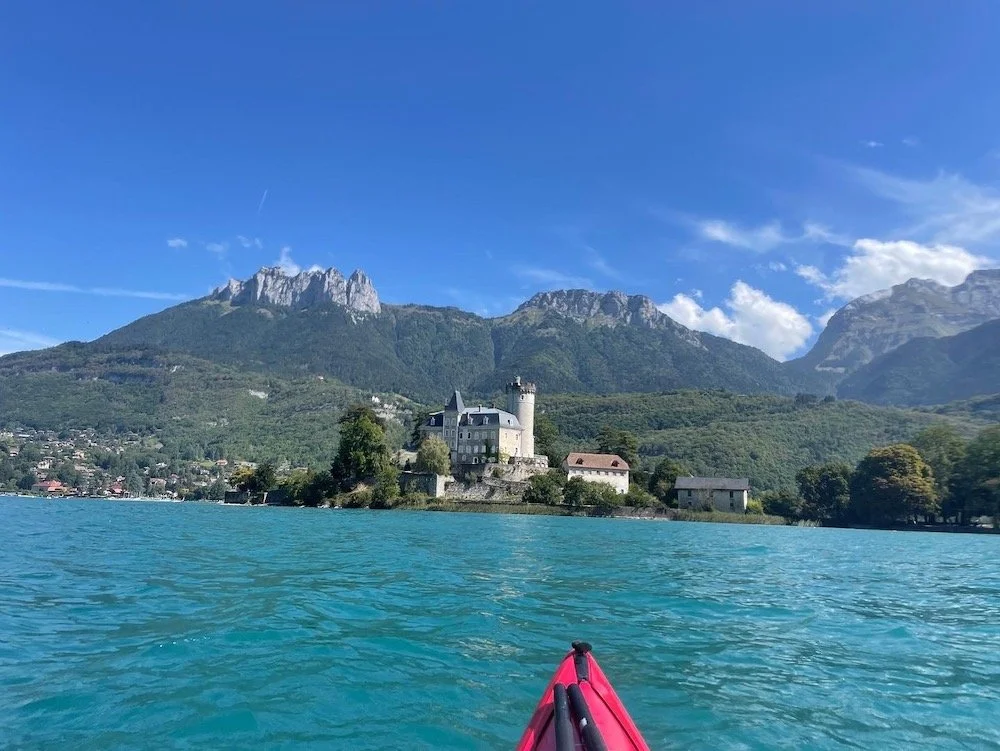
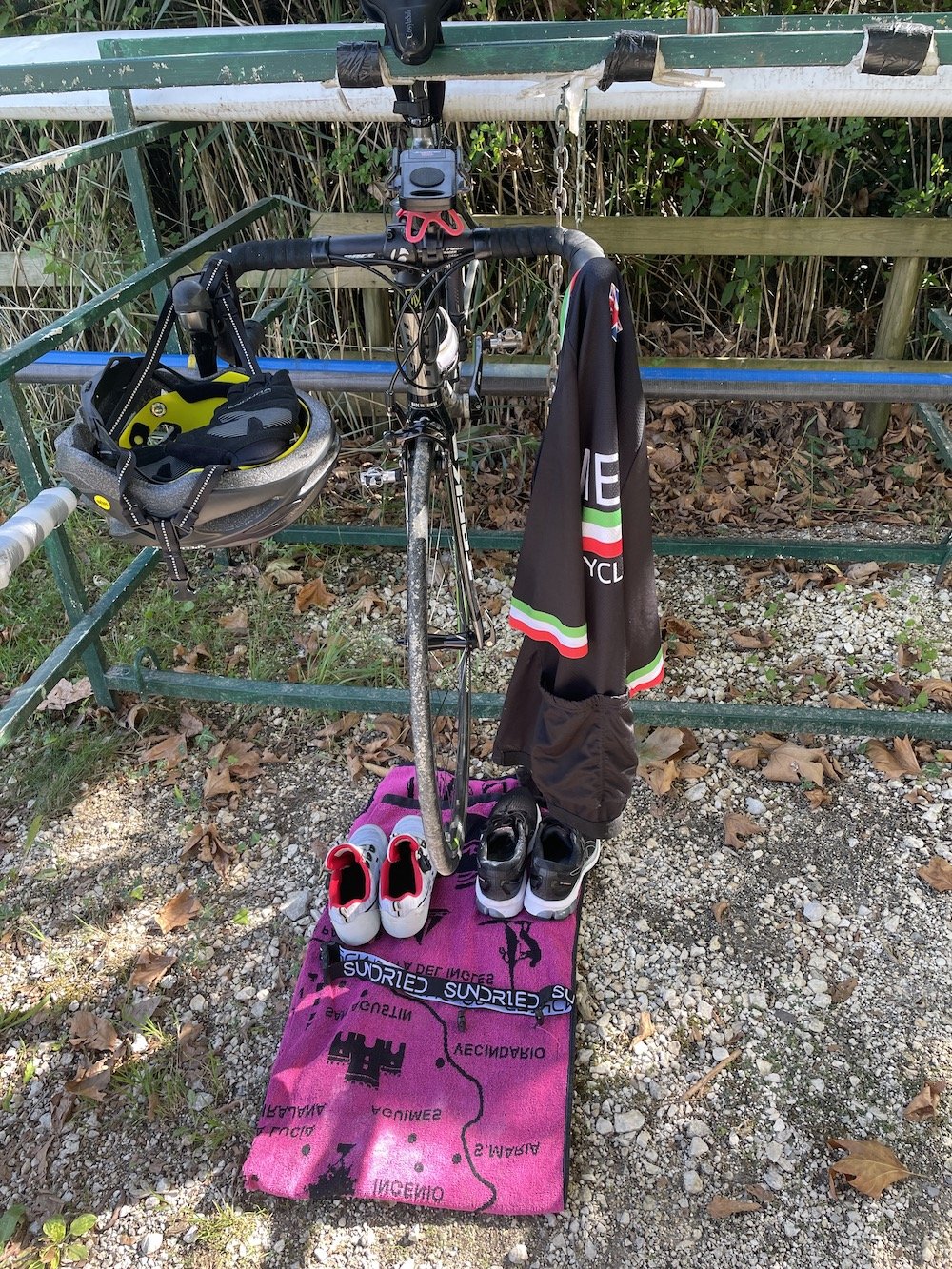

Unfortunately the worry of leaving the bike unattended prevented me from doing the full distance, but it was great for practising transitions.
Not long after I drove home I had the small matter of the Great Exmoor ride, which was a complete blood bath – ok, I finished it but doing such a hilly route when I was still sore after my escapade up Le Semnoz, was a daft idea.
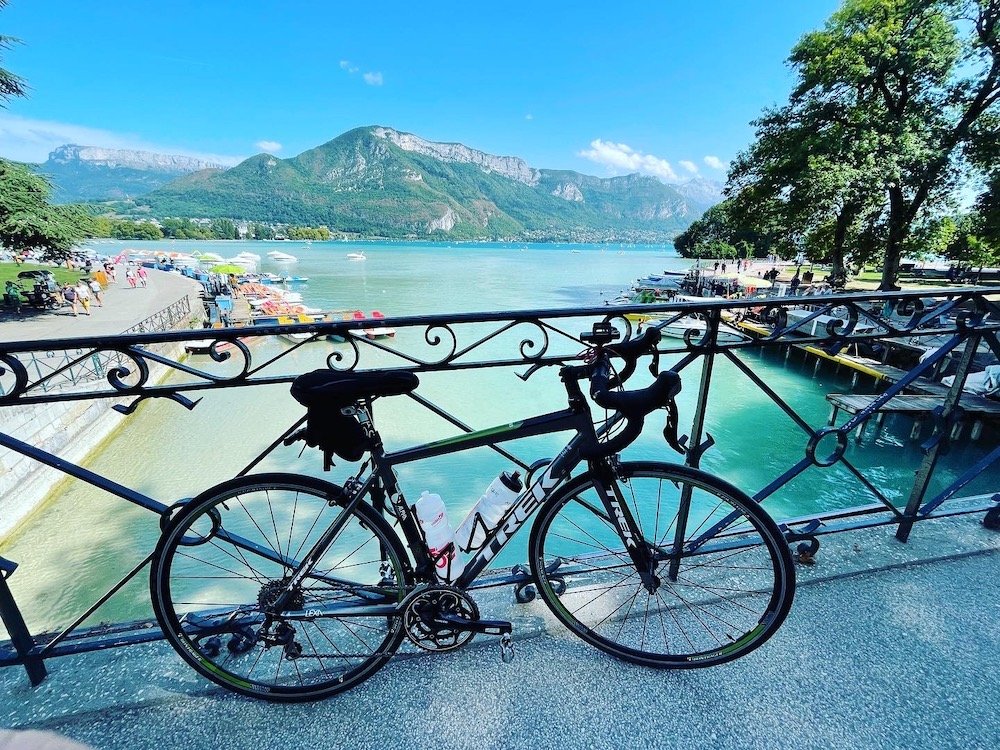
A week later came my first triathlon.
I was delighted to complete it and not finish last. My swim was quick, but I’d over done it and was out of breath for quite a while once I’d jumped on the bike….then, given I had done no running training at all, the 3km time was very, very poor.
I knew what I had to do to improve and vowed to take myself away on another training camp before the next one.
It was fantastic to have three amazing friends turn up – complete with cream tea and prosecco and their cameras – I was so grateful to Lisa, Jo and Paul for coming along and offering support and encouragement. They are the best.
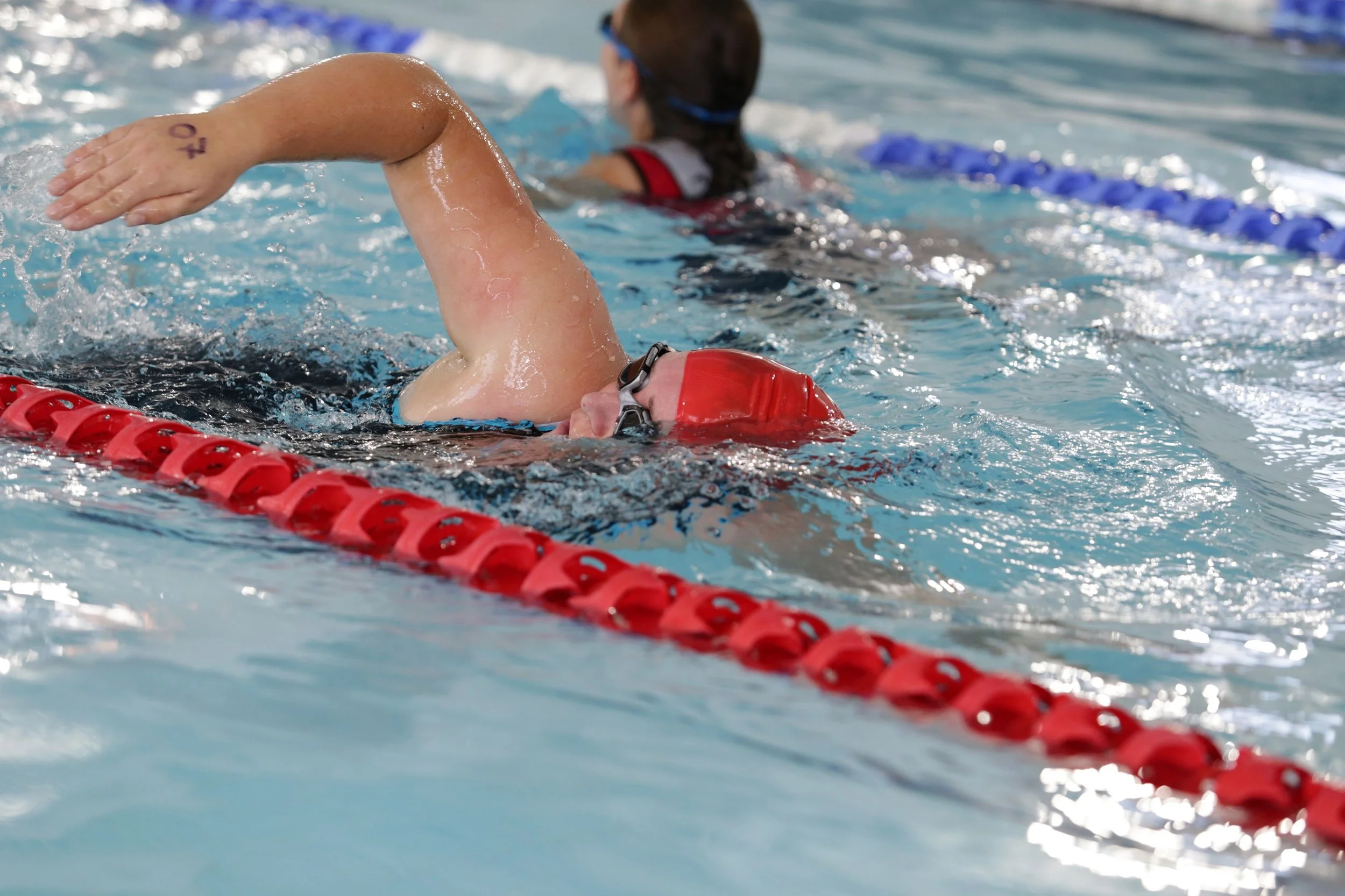
Christine in her first triathlon

Caves & Wine - What else is there?
After yesterday’s antics, I wanted a day off.
I met no resistance from Rich who was beginning to realise that the word ‘holiday’ had been misconstrued.
We decided to go and visit the vineyard at Saint-Saturnin and follow it up with a visit to a stunning show-cave, Grotte Clamouse.
I hadn’t visited either for almost a decade, so I was really looking forward to going back and showing it to Rich. Joe kindly loaned me one of his cameras so I was able to take some photos and video of our day out.


The vineyard was a great photo opportunity and we left with boxes and bottles of local wines, some for gifts and the rest for ourselves.
£100 lighter, we set off down the road to the show-cave.
We were treated to the best AV (in English and French) of cave geology, formation and 3D models that I have ever seen. It was outstanding and I wish some British show-caves would put as much effort into their experiences as this place. The show-cave guide was well educated, spoke in two languages and gave a detailed and interesting tour and knew the cave inside out.

There were plenty of photo opportunities as well as a music and light show, which might not be to everyone’s taste, but to be honest I find it hard to see how else they could show off the pinnacle of this fabulous cave in any other way. It was well done without being tacky and the tour was worth every penny of the 9 euros each….
Elaine and Duncan meanwhile had been spending their time diving the Rodel and hunting out various caves in the area to go and visit.
We headed back to camp central and dug out the BBQ having raided the local Super-U in Ganges. This fabulous supermarket has a meat and fish counter to die for and we went a bit mad, buying a big bag of tiger prawns, rack of ribs, some trout and salmon steaks, whole mackerel, beers plus salad things etc. Barely 60 euros later, we walked away with bags of goodies, amazed at how cheap it was.

Trimix fills in the middle of nowhere
It felt like the ‘last supper’ as we all sat round under the fairy lights, watching cave diving video films and footage that Joe shot of the Gourney-Ras. It was push day the next day in the Event de Perdreau – cylinders had been filled, trimix salvaged and gear was pretty much packed. All we had to do was go and lay more line…..what could possibly go wrong?......

Vineyards of St Saturnin